Last Updated on April 6, 2026 by Ian Naylor
Guest posting is still one of the best ways to grow your SEO authority and reach new audiences. But in 2026, editors are overwhelmed with generic, AI-driven guest posting pitches. To stand out, your outreach emails need to prove three things: you’re human, you’ve read their site, and you’re offering real value.
Here’s what works:
- Personalized subject lines mentioning the editor’s name or a specific article.
- Short, clear emails (under 150 words) that focus on their audience’s needs.
- Follow-ups are essential – 60% of responses come after follow-ups.
This article provides 10 actionable email templates for every step of guest posting outreach, from introductions to follow-ups. Each template is designed to help you connect with editors, pitch better ideas, and build lasting relationships. Ready to write emails that get replies? Let’s dive in.
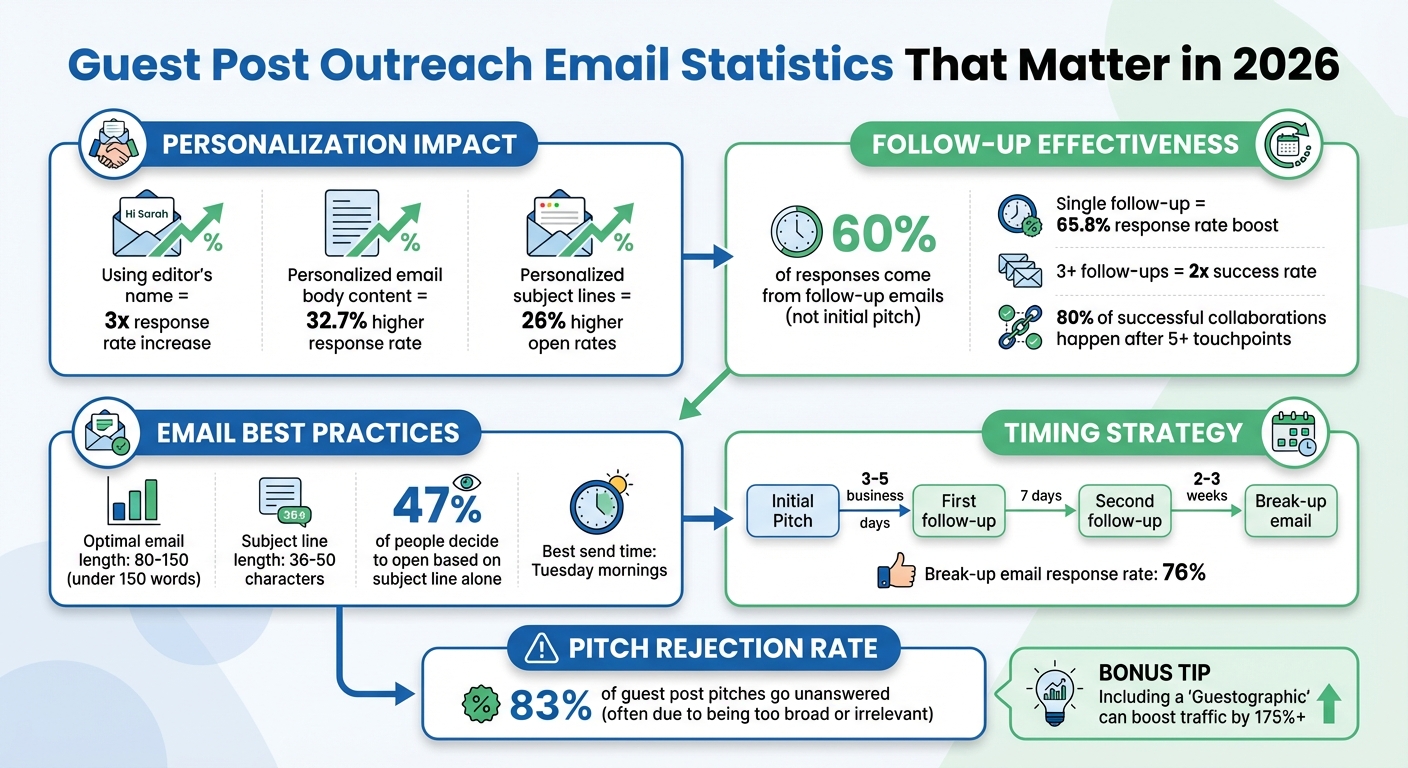
Guest Post Outreach Email Statistics: Response Rates and Best Practices 2026
How to Use Guest Posting to Build Backlinks: Craft a Guest Post Outreach Email (Template Included)
sbb-itb-88880ed
1. The Personalized Introduction Email
Your first email is crucial – it sets the stage for everything that follows. In 2026, showing genuine interest in their work is key to standing out.
Personalization
Start by addressing the editor by name. Check their site’s About page, LinkedIn profile, or recent bylines. Using "Hi Sarah" instead of "Dear Editor" can triple your response rate. Then, reference something specific from their content. For example: "I really enjoyed your recent SEO audit post, especially your insights on link velocity and backlink timing." This shows you’ve done your homework and aren’t sending a generic pitch.
Another way to add value is by pointing out something helpful. If you notice a broken link on their site, mention it before introducing your pitch. This not only grabs their attention but also sparks reciprocity – they’re more likely to respond positively when you’ve already offered something useful. Once you’ve personalized your email, it’s time to make your intentions clear.
Clarity of Intent
Keep it short and to the point. Editors are busy, and emails longer than 150 words often get ignored. Be specific about why you’re reaching out and what you’re offering. Instead of a vague statement like, "I’d love to contribute to your blog", say something like, "I noticed you haven’t covered [specific topic] yet. I’d like to write a 1,500-word guide on this for your readers."
Avoid overused phrases like "I hope this email finds you well" or "I am reaching out to inquire." These sound robotic and can be off-putting in 2026. Aim for a conversational tone that feels natural yet professional.
Tone and Professionalism
To boost your credibility, use a business email address (e.g., name@company.com) rather than a generic Gmail account. This small detail can make a big difference in how seriously editors take your pitch. Keep your tone friendly but respectful, and make it easy for editors to skim your email quickly.
Focus on what benefits their audience, not what you want. For instance, replace "I want to write for you" with "Your readers would gain a lot from…" This subtle shift positions you as someone offering value rather than seeking a favor.
Actionable Next Steps
End your email with a clear, straightforward question. Instead of saying, "Let me know if you’re interested", try, "Which of these three topics would fit best with your editorial calendar?" This makes it easier for the editor to respond and keeps the conversation moving. And remember, 60% of replies come from follow-ups. If you don’t hear back right away, don’t give up – your next email could be the one that gets a response.
2. The Article Idea Proposal
After making initial contact, the next step is to pitch a focused and well-thought-out article idea. This is your chance to show that you’ve done your research and understand the audience’s needs.
Clarity of Intent
Avoid sending vague or generic pitches. Instead of saying something like, "I’d like to write about SEO", craft specific, ready-to-publish headlines. For example, if you notice a gap in recent posts, propose something like "How SEO Teams Use AI for Backlink Outreach." Why does this matter? Because about 83% of guest post pitches go unanswered, often due to being too broad or irrelevant.
Outline 3–4 key points that your article will cover. For instance, you could propose a 2,000-word piece that includes:
- A breakdown of three automation tools, complete with pricing details
- A real-world B2B case study
- Common mistakes to avoid
- A step-by-step checklist for implementation
Also, include specifics like the word count and a clear delivery date. For example, you might say, "I can deliver the full draft by April 20, 2026." These details make your pitch more actionable and professional.
Personalization
Tailor your pitch by offering 2–3 distinct topic ideas rather than sending out generic suggestions. Abdulla Abdurazzoqov, Founder of LinkIntel, emphasizes:
"Offering 5 generic topics signals you haven’t researched their content gaps".
Each proposed topic should address a clear content gap (using a keyword gap finder) or build on a popular series. If you have exclusive data or original research, mention it. For example, including a "Guestographic" (an infographic paired with your article) could boost traffic by over 175%. Editors are more likely to accept pitches that bring something unique to the table – something they can’t easily create themselves.
Actionable Next Steps
Wrap up your proposal with a low-pressure question, such as: "Which of these topics aligns best with your April editorial calendar?" This approach invites a quick and straightforward response from the editor, increasing your chances of moving forward.
3. The Better Content Offer
Once you’ve nailed personalized outreach, it’s time to focus on making your content offer stand out. One way to do this is by improving existing content to provide added value and secure your guest post.
Clarity of Intent
Start by identifying a specific area where their content could be improved. Maybe you’ve noticed an article from 2023 that’s missing updated statistics or one with broken outbound links. Reference the exact URL and explain how you can enhance it. For instance: "I came across your article ‘SEO Trends for 2024’ at [URL]. It’s a great piece, but I noticed it features outdated data. I’d love to update it with 2026 benchmarks and include three fresh case studies."
The goal here isn’t to criticize their work but to present yourself as a strategic partner. As SEO Webster puts it, "Specificity = credibility". When you identify a clear content gap and offer a practical fix, editors are more likely to take you seriously.
Tone and Professionalism
Keep your email concise – aim for under 150 words – and make sure it sounds human, not robotic. Address the editor by their first name (this alone can triple your response rate) and send your pitch from a professional business domain rather than a generic email address.
A great approach is to use the broken link replacement strategy. If you find a broken link, mention it upfront: "I noticed the link to [Resource] on your [Topic] page is broken. I’d be happy to provide an updated guide." This tactic works well because it solves a problem for them first, creating a sense of reciprocity. A warm, conversational tone can set the stage for productive collaboration.
Actionable Next Steps
Wrap up your pitch with a clear and direct question. For example: "Would this be a good fit for [Site Name]?" or "Should I send over an outline?". You can also offer to share a preview of your idea – a Loom video or a Notion document showcasing your proposed angle – before committing to a full draft.
If you plan to promote the article, mention it: "I’ll share this with my 5,000 newsletter subscribers and across LinkedIn." Editors are often drawn to content that has built-in promotional potential, so this can make your offer more appealing. Finally, suggest a specific timeline to show you’re mindful of their schedule. For example: "I can have the draft ready by April 25, 2026." This demonstrates respect for their editorial calendar and your ability to deliver on time.
4. The Follow-Up Email
Even the best pitches can end up ignored. That’s why follow-up emails are so important – they help overcome the silence and keep your guest posting strategy on track as part of your guest posting for SEO efforts. But a successful follow-up requires careful planning.
Timing and Frequency
Timing your follow-ups is just as important as crafting your original pitch. A good rule of thumb? Wait 3–5 business days after your initial email before sending the first follow-up. This gives editors enough breathing room to review your pitch without feeling rushed. If you still don’t get a response, send a second follow-up 7 days later. Finally, if the silence continues, you can send a “break-up” email 2–3 weeks after your original pitch to politely close the conversation.
Here’s why follow-ups matter: A single follow-up can boost response rates by 65.8%, and sending three or more can double your chances of success. In fact, 80% of successful collaborations happen only after five or more touchpoints.
Once you’ve nailed the timing, focus on making your message as clear and relevant as your original pitch.
Clarity of Intent
Your follow-up email should reintroduce your pitch in a concise, value-packed way. Keep it short – around 80–150 words. Use a subject line that connects it to your original email, like "Re: [Original Subject Line]", or go with something straightforward like "Quick follow-up" or "Quick reminder." Avoid vague phrases like “just checking in.” Instead, offer fresh value. For instance, mention a new data point you’ve come across, use a guest post topic generator for fresh angles, or reference a recent article they wrote that ties into your pitch.
Actionable Next Steps
End your email with a clear, easy-to-answer question, such as: "Does this topic work for you?" or "Shall I send an outline?" Keep the tone polite and avoid coming across as pushy. As Outreach.io puts it:
"The goal of a follow-up email isn’t to be pushy or repetitive. Instead, it’s to stay top-of-mind, address unanswered questions, share relevant insights, or provide a clear next step".
If you don’t hear back after two or three follow-ups, it’s time for a final “break-up” email. Bryan Kreuzberger, founder of BreakthroughEmail, swears by the effectiveness of this approach:
"No matter how many variations I try, I can’t match the results of the ‘Permission to close your file?’ email template".
This tactic works because it taps into a psychological principle called loss aversion, achieving a 76% response rate by prompting decision-making.
5. The Acceptance Response
Once you’ve nailed the follow-up, the next step is crafting an acceptance response that strengthens your connection. This email is more than just a formality – it lays the groundwork for a lasting partnership.
Tone and Professionalism
Your tone should balance enthusiasm with professionalism. Show genuine appreciation for the opportunity by acknowledging the value of their platform. As Bradley Bernake from OutReachFrog says:
"It’s good to be conversational and write your email in a flowing tone, but it’s not good to be informal. And it’s not wise at all to be ungrateful or treat an influencer as if you are doing them a big favor."
- Bradley Bernake, OutReachFrog
Avoid generic phrases like "I hope this email finds you well" or anything that feels overly automated. Instead, aim for a message that feels personal and thoughtful, reflecting your excitement about the collaboration.
Actionable Next Steps
Make your enthusiasm practical by outlining clear next steps. For example:
- Set a specific delivery date for your draft (e.g., "I’ll have the draft ready within one week").
- Ask for any style guidelines, including word count, formatting, or image preferences.
- Confirm details like author bio policies and backlink rules to ensure your draft meets their expectations.
If you have an audience, such as a 5,000-subscriber newsletter, mention that you’ll promote the post to your readers. You could also offer to engage with comments on the post after it goes live, which can help boost its performance. To take things a step further, suggest an ongoing collaboration or even a link exchange vs guest posting where they contribute to your platform as well.
As Bradley Bernake points out:
"Guest posting will work only if you build authentic relationships with fellow bloggers and influencers in your industry."
- Bradley Bernake, OutReachFrog
6. The Polite Rejection Response
Handling rejections with care isn’t just about saying "no" – it’s about keeping the door open for future opportunities. A thoughtful response can protect professional relationships and set the stage for potential collaborations down the road.
Tone and Professionalism
When rejecting a pitch, aim for a tone that feels personal and considerate. Avoid cookie-cutter phrases that come off as automated. Instead, write as if you’re speaking directly to a colleague. Keep your message brief – under 150 words – so it’s easy to read. Mention something specific from their pitch to show you gave it genuine attention. Above all, maintain a respectful tone that acknowledges their effort and keeps the possibility of future collaboration alive.
Actionable Next Steps
Even when turning someone down, you can provide value. For instance, if your schedule is packed, say something like, "We’re fully booked through Q3 2026, but feel free to reach out again in October." Alternatively, suggest other ways to work together, such as refreshing an older article on your site, a quick social media mention, or exploring ABC link exchanges through tools like 3Way.Social.
Be clear about your reason for declining – whether it’s a lack of alignment with your current topics, a packed schedule, or a need for more original data. This kind of feedback not only helps them refine their future pitches but also demonstrates that you took their proposal seriously. A well-crafted rejection isn’t just polite; it enhances your reputation as a professional and leaves the door open for future guest posting opportunities.
7. The Guidelines Request Email
Personalization
Editors in 2026 are inundated with generic emails, so standing out means showing you’ve genuinely engaged with their content. Start by addressing the editor by name – this small step makes a big difference. You can find their name on the "About" page, LinkedIn, or by checking recent article bylines. Then, reference a specific article they’ve written and highlight something that caught your attention. Instead of a vague compliment like "I love your blog", say something specific, such as, "Your recent article on link-building strategies offered a fresh perspective on anchor text diversity." This level of detail shows you’ve done your homework.
Clarity of Intent
Once you’ve personalized your email, get straight to the point. Clearly state your purpose in the first two sentences. Whether you’re asking for editorial guidelines or pitching an idea, make it clear – for example: "Are you currently open to guest contributions for Q2 2026?" Briefly mention your credentials and include links to your best work to establish credibility. Editors appreciate directness, and this approach saves them time while showing that you’re a serious contributor.
Tone and Professionalism
Keep your email short and to the point – aim for 80 to 150 words. Use a conversational tone that feels natural but professional. Always send your email from a business domain (e.g., name@company.com) rather than a personal email address. Frame your email as a potential collaboration and suggest a few specific topic ideas that align with their site’s needs. This not only demonstrates your value but also makes it easier for the editor to see how you fit into their content strategy.
Actionable Next Steps
Wrap up your email by encouraging a response. End with an open-ended question like, "Which of these topics do you think would resonate most with your readers?" You can also add a P.S. to offer immediate value, such as saying you’d be happy to share their recent content with your social media audience or explore reciprocal link exchanges through platforms like 3Way.Social. If you don’t hear back, plan a polite follow-up 3 to 5 days later. This approach helps position you as a thoughtful and collaborative contributor in the guest posting process.
8. The Feedback Response Email
Responding to feedback thoughtfully is key to maintaining strong relationships and keeping collaboration on track. When an editor provides feedback on your guest post draft, take the time to address their suggestions directly. Mention specific points they raised – whether it’s adding more data to section three, refining your anchor text in SEO, or expanding on a case study. This approach shows you’ve carefully considered their input and value their expertise.
Clarity of Intent
Be upfront about the purpose of your email. Are you sharing a revised draft, asking for clarification, or confirming the next steps for publication? Keep your message concise – 150 words or less is ideal since editors often skim emails. If you’re sending an updated draft, highlight exactly what you’ve changed instead of using vague language like "I’ve made some updates."
Tone and Professionalism
Write in a conversational yet professional tone. Avoid overused phrases like "I hope this email finds you well" or "I am reaching out to inquire", as these can feel impersonal. Instead, express genuine appreciation for their feedback. As the SEO Webster team puts it, "Outreach is about relationships". End your message with a clear call to action to keep things moving forward.
Actionable Next Steps
Show that you’re invested in the success of the collaboration. Offer to engage with readers in the comments once the post is live or suggest sharing the published article with your newsletter subscribers. You can also pitch new topic ideas for future projects, positioning yourself as a consistent contributor rather than a one-time guest. To keep the tone light, close with a "no pressure" remark. Additionally, consider mentioning reciprocal opportunities through platforms like 3Way.Social to explore long-term link-building partnerships.
9. The Promotion Request Email
Once your guest post is published, sending a well-thought-out promotion request email can help extend its reach while strengthening your relationship with the publisher. This email encourages the publisher to share your content through their channels, like newsletters, social media, or email lists. The goal? Make it simple for them to say yes by highlighting how both parties benefit.
Personalization
Like in earlier outreach steps, personalization is key here. Tailor your email to show you’re invested in their content strategy. Mention something specific, like a recent tweet or newsletter where they promoted another guest post. For instance: "I noticed you shared Sarah’s article on Twitter last week – it seemed to get great engagement." This kind of acknowledgment shows you’re paying attention and makes your request feel more genuine. Personal touches like these often lead to better response rates.
Clarity of Intent
Be upfront about your request and emphasize the mutual benefits. Share details about your own audience – like your newsletter size or social media following – to demonstrate the value you bring. As Jeremy Chatelaine from QuickMail points out:
"A high-quality guest post has value for your recipient. They get a high-quality blog post that they’d usually have to spend days writing. In exchange for a simple link, it’s not a bad trade".
By offering to promote their content to your audience as well, you create a win-win situation and make it easy for them to support your post.
Actionable Next Steps
Make it effortless for the publisher to act. Offer to provide a pre-written caption, graphics, or even a snippet for their newsletter. You could also suggest coordinating on a publication date that works for both sides. If you don’t hear back, don’t worry – send a polite follow-up in 3–5 days. After all, 60% of replies often come from follow-ups rather than the first email.
For an even smoother process, consider using tools like 3Way.Social to manage your outreach, coordinate promotions, and track engagement. It’s a great way to stay organized and ensure your guest post gets the visibility it deserves.
10. The Thank You and Collaboration Email
Once your guest post is published, sending a thoughtful thank-you email can do more than just wrap things up – it can pave the way for future collaborations. This step transforms a one-time contribution into a potential long-term partnership. The goal is to express genuine appreciation while positioning yourself as a reliable and valuable collaborator.
Personalization
Make your email stand out by referencing the published article directly – mention the title and highlight a specific detail, such as a section you enjoyed writing or a reader comment that caught your attention. This shows that you’re not just moving on but are invested in the article’s performance and the site’s success. Addressing the editor by name adds a personal touch and demonstrates professionalism.
Clarity of Intent
Use this opportunity to express your interest in building a lasting relationship. Be upfront about your desire to contribute more. For example, you could suggest becoming a regular contributor with a consistent schedule or propose a guest post exchange, where you feature their content on your platform in return. Highlight the mutual benefits of continued collaboration, such as reaching broader audiences and sharing diverse perspectives. For instance, you might say, "I’d love to explore contributing monthly articles on topics that align with your readers’ interests."
Actionable Next Steps
Encourage a quick response by offering specific, actionable suggestions. For instance, you could volunteer to monitor and reply to reader comments on your post, which helps lighten their workload. Share 2–4 ideas for future topics or propose a quick call to discuss collaboration opportunities. Keep your email concise – aim for under 150 words. If you’re juggling multiple guest posting relationships, tools like 3Way.Social can help you stay organized and manage partnerships effectively.
What Makes Guest Post Outreach Emails Work
Crafting effective guest post outreach emails boils down to three key elements: personalization, attention-grabbing subject lines, and strategic follow-ups.
Let’s start with personalization. It’s not just a nice touch – it’s a game changer. Emails with personalized content in the body get a 32.7% higher response rate, and personalized subject lines bump open rates by 26%. But personalization isn’t just about addressing someone by name. To stand out, reference a specific point from a recent article, highlight a content gap on their site, or pitch a topic that aligns perfectly with their audience. These details show you’ve done your homework.
Next, subject lines. They carry a lot of weight – 47% of people decide whether to open an email based on the subject line alone. To make yours count, keep it between 36 and 50 characters to avoid getting cut off on mobile devices. Try formats like "Content idea for [Site Name] – [Topic]" or "Quick fix: your broken link on [Page Title]". On the flip side, steer clear of overused phrases like "Guest Post Opportunity", which often scream spam.
Timing also plays a critical role. The best time to send outreach emails? Tuesday mornings – editors tend to be more responsive then. If your pitch is tied to a recent post, aim to send your email within 48 hours while the topic is still fresh in their minds. And don’t underestimate follow-ups. A whopping 60% of replies come from follow-up emails rather than the initial pitch. Send your first follow-up 3–5 business days after your original email to gently nudge them.
Finally, keep your pitch short and sweet – aim for 80 to 150 words. Use a professional domain, read your email aloud to ensure it sounds natural, and stick to a conversational tone. Avoid robotic, generic language at all costs. These small adjustments can make a big difference.
Conclusion
Guest posting outreach isn’t about blasting out a slew of generic emails. It’s all about quality over quantity. A single, well-thought-out, personalized pitch can easily outperform dozens of cookie-cutter emails.
The templates shared earlier are just a starting point – think of them as a framework. To stand out, tailor your pitch by referencing specific content or demonstrating genuine interest in the editor’s work. In 2026, editors are inundated with AI-generated spam, so anything that feels automated is likely to get ignored. A personal touch can make all the difference and lays the groundwork for the actionable strategies discussed earlier.
For better results, always use a business domain email and include 2–3 links to your previous work. This builds credibility and helps the editor trust you. Summarizing key points from earlier will also make your follow-ups more effective and professional.
The ultimate goal here isn’t just about snagging a backlink – it’s about creating lasting partnerships. Focus on delivering real value, whether that’s through exclusive data, filling content gaps, or even fixing broken links. By doing so, you’ll build a network of editors who are more likely to engage with your future pitches. Darren Blumenfeld from InboxAlly puts it perfectly:
"When you show up with value, pitch thoughtfully, and follow up like a real human (not a spam bot), you’re already ahead of most people competing for the same opportunities".
Every step of this outreach process contributes to a strategy that’s built to last. By personalizing your messages and treating each outreach effort as the beginning of a professional relationship, guest posting becomes more than a numbers game – it becomes a way to grow sustainably.
And if you’re looking to take your guest posting efforts to the next level, tools like 3Way.Social can help simplify your outreach and secure those high-quality backlinks.
FAQs
How can I quickly find the right editor’s name?
To find an editor’s name quickly, try using tools tailored for guest bloggers to locate contact details. You can also perform targeted Google searches with phrases like “guest post by + Blogger Name” or “write for us.” These strategies, along with website-scraping tools, can help you uncover editor names more efficiently. Personalizing your outreach with this information can boost your chances of success.
What should I include to prove I’m not using AI spam?
To make sure your guest posting outreach emails don’t come across as spammy or automated, focus on adding a personal touch. Mention specific details about the recipient’s website, like a recent post you enjoyed or a unique aspect of their content. Propose topics that align with their audience’s interests, showing that you’ve done your homework. Steer clear of generic or overly promotional language – your goal is to sound thoughtful and sincere, proving you’ve put real effort into your outreach. This makes it clear that your email is coming from a real person, not a bot.
How many follow-ups is too many?
When it comes to follow-ups, there’s no magic number that works universally – it all depends on the situation and who you’re reaching out to. That said, successful outreach often involves sending multiple follow-ups to increase your chances of getting a reply. The trick is to strike the right balance: stay courteous, offer something meaningful in your messages, and avoid coming across as pushy. This way, you can keep things professional while improving your response rate.