Do-Follow Links Through Event Sponsorships
Get high-quality do-follow backlinks and improve local SEO by sponsoring relevant events—confirm link types, negotiate placement, and track results.

Last Updated on January 5, 2026 by Becky Halls
Want to boost your website’s SEO and local visibility? Sponsoring events can help you earn high-quality do-follow backlinks while strengthening your brand presence. Here’s what you need to know:
- Do-follow links pass link equity, improving search rankings. Event sponsorships often include these links on websites, press releases, or blogs.
- Local sponsorships can increase visibility by 30% and tap into 800 million monthly “near me” searches in the U.S.
- Popular sponsorship options include trade shows, charity events, youth leagues, and academic programs, with costs ranging from $200 to $20,000+.
- Ensure links are do-follow, align with your brand, and comply with Google’s guidelines to avoid penalties.
- Tools like Ahrefs and Semrush can help track link performance and measure ROI.
Sponsorships are not just about backlinks – they also enhance your community presence and drive traffic. Choose events wisely, negotiate terms carefully, and track results to maximize your investment.
We’ve noticed sponsorship links are most valuable when the event sits in the same ‘topic neighborhood’ as your business. If the audience overlap is weak, the SEO impact usually is too.
How to Get Backlinks for Local SEO (2025 Guide)
Common Problems When Getting Do-Follow Links from Event Sponsorships
Sponsoring events can be a great way to earn quality backlinks, but it’s not without challenges. Being aware of these potential pitfalls can help you make smarter decisions, ensuring your sponsorship dollars translate into real SEO benefits.
Ensuring Links Are Do-Follow
One common hurdle is that sponsor links on event websites are often tagged as nofollow or sponsored. These attributes – rel="nofollow" or rel="sponsored" – block the transfer of link equity, which is essential for SEO. As Victor Celer explains, “You need to check the HTML code of the link. If it doesn’t explicitly say nofollow in the rel tag then it is a dofollow link”.
Since Google introduced the rel="sponsored" attribute in 2019 to identify paid collaborations, it functions similarly to nofollow in terms of SEO impact. Always inspect the link’s HTML and consider including a “Link Quality Assurance” clause in your sponsorship agreement to guarantee do-follow links on high-visibility pages.
Beyond link quality, the event itself should align with your business goals.
Choosing Events That Align with Your Brand
Focus on events that not only have high domain authority but also attract the right audience for your business. Use tools like Ahrefs or SEMrush to assess the domain’s authority and verify if previous sponsors received quality backlinks. Websites with .edu or .gov domains often carry extra weight in SEO.
For local businesses, geographic relevance is crucial. With over 800 million “near me” searches happening monthly in the United States, sponsoring locally relevant events can boost your visibility. Look for events that resonate with your audience and complement your brand’s credibility.
Lastly, make sure your sponsorship strategy stays on the right side of Google’s rules.
Staying Compliant with Google’s Guidelines
Google’s algorithms reward links from authentic partnerships and genuine community contributions while penalizing manipulative tactics. Avoid pushing for overly optimized anchor text, as this could raise red flags. Instead, stick to natural anchor text, such as your business name or general terms, which feels more organic.
Sponsorship links should be placed in clearly labeled “Sponsor” or “Partner” sections. Frame your request as a recognition of your partnership, rather than a demand for SEO-optimized links. This approach not only ensures compliance but also enhances your reputation. In fact, legitimate sponsorships can boost local search visibility by up to 30%.
How Event Sponsorships Create Do-Follow Links
Sponsoring an event can be a smart way to earn do-follow backlinks from the event’s official website. These links, especially when they come from high-authority domains like .edu or .gov, can significantly boost your site’s search engine rankings by passing valuable link equity. This boost creates a solid foundation for additional SEO benefits, including improved contextual and local SEO signals.
Event sponsorships strengthen SEO by creating links that are highly relevant to your industry or location. These sponsor links often appear on pages tied to your niche or geographic area, which sends strong local SEO signals to search engines. Beyond that, sponsorships can lead to backlinks from local news outlets, press releases, and blogs, further amplifying your SEO efforts. In fact, businesses that collaborate on sponsorships often see a 50% increase in inbound links compared to those going solo.
Events Worth Sponsoring
Choosing events that align with your brand is key to maximizing SEO benefits. Not all events offer the same value, so it’s important to pick wisely.
- Professional conferences and trade shows: These events typically attract media attention within your industry, leading to highly relevant backlinks.
- Youth sports leagues: These provide excellent local SEO opportunities. Sponsorships, which often cost between $200 and $2,000 annually, can get your business featured on roster pages, league calendars, and tournament websites.
- Academic and educational events: These can grant access to coveted .edu backlinks through scholarships, lectures, or academic competitions.
- Charity fundraisers: Events like 5K runs or community galas often recognize donors on their websites, creating opportunities for backlinks.
- Community festivals: These events frequently highlight sponsors on main event pages and attract coverage from local media.
Each type of event offers unique benefits, making it important to align your sponsorship choices with your SEO goals. We’ve seen event sponsorship links work best when they’re tied to something real – a speaker slot, a workshop, a scholarship, a community perk. The link feels earned, not rented.
Where Your Links Will Appear
The placement of sponsor links can vary, but they often appear on high-value pages that deliver both visibility and SEO benefits. Here are some common placements:
- Sponsor directories and event homepages: Title sponsors often secure prominent placements, such as on the homepage, which drives both traffic and visibility.
- Event blogs and recaps: Post-event summaries or dedicated articles often highlight sponsors, creating content-rich backlinks with strong contextual relevance.
- Press releases: Links to major sponsors are frequently included in press releases sent to local media, expanding your reach beyond the event’s website.
- Registration and landing pages: These pages, where attendees sign up, often feature sponsor logos with outbound links.
- Educational sponsorships: Links may appear on .edu domains, such as scholarship or resource pages.
- Digital assets: Even downloadable materials like event guides, presentation slides, or PDFs can embed sponsor links.
As Si Quan Ong, Content Marketer at Ahrefs, puts it: “The secret weapon behind a successful event isn’t just great speakers, a cool venue, or sold-out tickets. It’s also the sponsors who bring in important revenue while adding credibility to your event”.
We’ve seen the best outcomes when sponsors negotiate placement – not just a logo grid. A short blurb, a contextual mention, and a link near relevant copy tends to outperform a footer logo.
sbb-itb-88880ed
How to Get Better Results from Do-Follow Links from Event Sponsorships
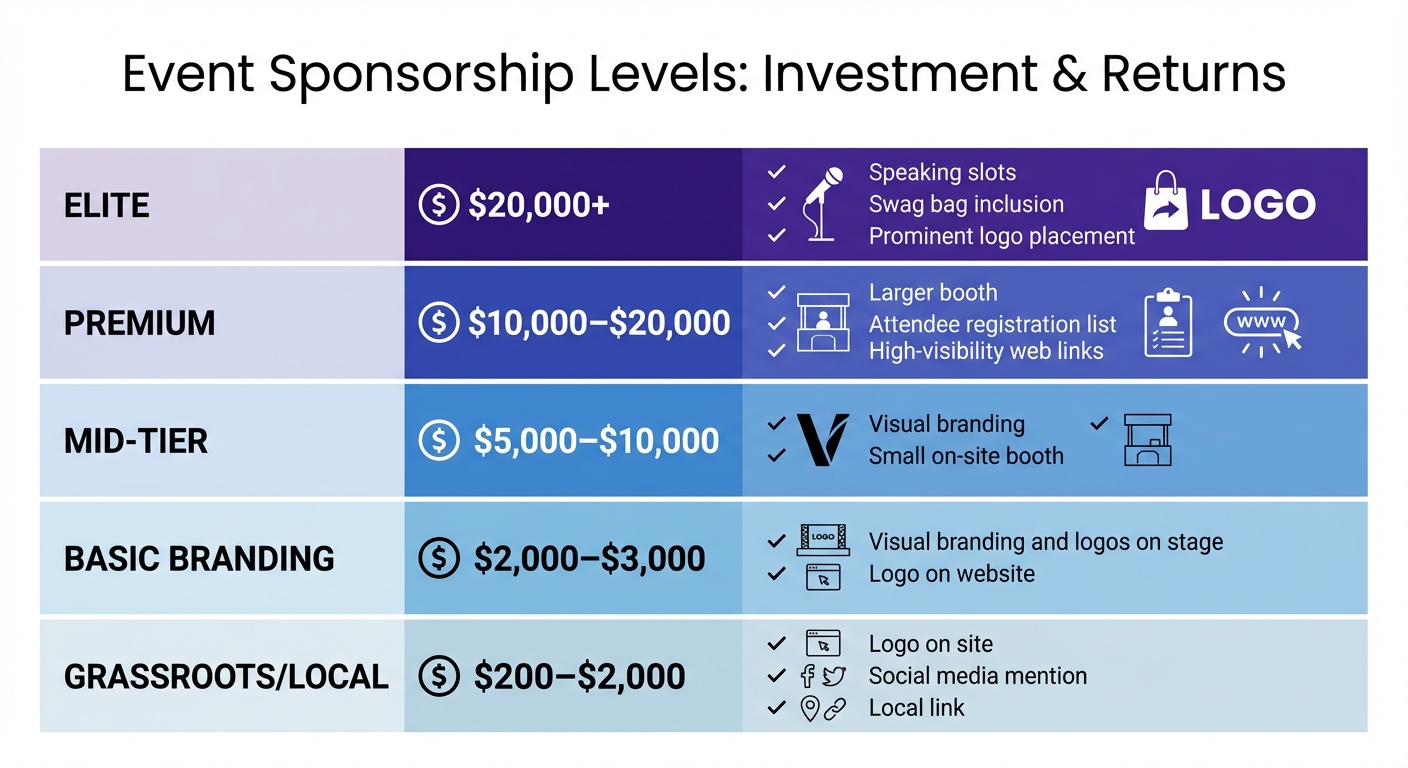
Event Sponsorship Levels: Costs and Deliverables Comparison
Maximizing the value of your sponsorship investment takes careful planning and clear communication. The difference between an average sponsorship and one that delivers long-term SEO benefits often hinges on how you choose events, negotiate terms, and structure your proposals. Below, we’ll dive into strategies to help you identify the right events, work effectively with organizers, and craft proposals that secure those all-important do-follow links.
Choosing the Right Events to Sponsor
Selecting the right event starts with understanding your audience and the potential SEO value. Sometimes, a smaller, niche event with a highly relevant audience can yield better results than a massive, less-focused one. Pay attention to event websites with high domain authority – especially those with .edu or .org extensions – as they typically pass more link equity.
To assess an event’s potential, research how it treated sponsors in the past. Look for previous editions online and check if sponsor links were do-follow and are still live. You can use Google search footprints like:
site:eventbrite.com "become a sponsor" + [your keyword]
This helps uncover sponsorship opportunities systematically. Additionally, set up Google Alerts for terms like “call for sponsors” or “sponsorship opportunities” in your industry.
Local events are especially valuable. Local links are the second most important factor for local organic search rankings. Community events, such as youth sports leagues, are a great example. Sponsorships here typically cost between $200 and $2,000 annually and can deliver excellent returns through roster pages or league calendars. Also, consider targeting local colleges or universities hosting seminars to secure high-authority .edu backlinks.
Working with Event Organizers
Once you’ve selected the right events, effective communication with organizers is essential to turn sponsorships into lasting SEO benefits. Start by being transparent during initial discussions. Ask for specifics, such as attendance numbers, demographic details, and how sponsors were supported in the past.
As Si Quan Ong from Ahrefs puts it: “The fastest way to lose our interest is to hide behind vague claims like ‘well-attended’… We want to see everything laid bare”.
Frame your link requests as an “online partnership acknowledgment” or “website recognition” to align with Google’s guidelines while clearly communicating your needs. Collaborating with complementary brands on sponsorships can also be a smart move – companies that do this have reported up to a 50% boost in inbound links.
To secure long-term benefits, negotiate multi-year or multi-event agreements. Include clauses in the contract to ensure links remain live for a significant period after the event ends. Offer to promote the event on your own channels in exchange for better link visibility, and keep in touch after the event to verify links stay active and explore future opportunities.
Writing Sponsorship Proposals
A strong sponsorship proposal should focus on mutual benefits. Start by explaining how the partnership will help both parties, not just what you want to gain. Clearly outline your marketing goals and show how the event aligns with them. Include a clear ROI pitch, detailing what the organizer will get in return – whether it’s access to your audience, content collaboration, or promotional support.
Be specific about your link requirements. Request do-follow links, relevant anchor text, and permanent placement on high-traffic pages. Specify whether you prefer links on the homepage, a sponsor page, blog posts, or press releases. Since cold sponsorship proposals typically have response rates of 5%–15%, personalize each one by referencing the organization’s past initiatives or community impact.
| Sponsorship Level | Price Range (USD) | Key Deliverables |
|---|---|---|
| Grassroots/Local | $200–$2,000 | Logo on site, social media mention, local link |
| Basic Branding | $2,000–$3,000 | Visual branding and logos on stage and website |
| Mid-Tier | $5,000–$10,000 | Visual branding plus small on-site booth |
| Premium | $10,000–$20,000 | Larger booth, attendee registration list, high-visibility web links |
| Elite | > $20,000 | Speaking slots, swag bag inclusion, prominent logo placement |
End your proposal with a clear response deadline to create urgency and keep planning on track. Before sending, confirm who has the authority to approve sponsorships. You might also request an initial meeting to learn what worked for past sponsors before drafting your final proposal.
Tracking and Improving Your Sponsorship Results
When it comes to link acquisition, tracking your sponsorship performance is key to ensuring you’re getting a solid return on investment. Without proper monitoring, it’s impossible to pinpoint which events are boosting your SEO efforts and which ones are draining your budget.
Checking If Your Links Are Do-Follow
One of the first things to confirm is that your paid links are do-follow and indexed. Tools like the Ahrefs SEO Toolbar make it easy to validate this directly on live pages. For a more comprehensive review, platforms like Ahrefs or Semrush allow you to filter your backlink profile by do-follow status. Ahrefs refreshes its data every 15 minutes, while Semrush crawls an impressive 10 billion URLs daily to keep their information up to date.
To catch new links as they appear, set up Google Alerts for your brand. If you find a link that’s either missing or incorrectly marked as no-follow (despite your agreement), contact the organizer immediately with your contract details to resolve the issue.
Measuring What Matters
Once you’ve confirmed the status of your links, it’s time to measure their impact. Keep an eye on both the technical metrics and the broader business outcomes. Start by tracking details like the publish date of the link, the referring page, the target page on your site, and the anchor text used. While metrics like Domain Authority (DA) or Domain Rating (DR) can provide a quick snapshot of the linking site’s quality, remember that relevance to your niche often outweighs raw scores.
For a deeper look at page-level impact, monitor keyword rankings and organic traffic on the pages where your sponsorship links appear. Results often take 1–3 months to materialize. Additionally, track referral traffic from the event’s website and any conversions or revenue generated. This data will help you determine whether the sponsorship was worth the investment. Keep in mind that links from unique referring domains carry more weight with search engines than multiple links from the same site – each unique domain acts as a separate endorsement.
Use these insights to fine-tune your sponsorship approach moving forward.
Making Changes Based on Results
Conduct a post-event analysis within days of the event to evaluate its success.
Si Quan Ong from Ahrefs emphasizes: “The most important factor we look at is our team’s post-mortem… a brutally honest assessment”.
Review whether the event effectively reached your target audience and delivered the visibility it promised. Use performance data to negotiate better terms for future sponsorships. If an event underperformed in terms of traffic or engagement, use that as leverage to request discounts or improved placement for the next round. To get a broader perspective, check platforms like Reddit, LinkedIn, and X for unfiltered reviews from other attendees and sponsors.
Focus your resources on building long-term partnerships with events that consistently deliver strong backlinks and engagement. Avoid spreading yourself thin with one-off sponsorships. To stay ahead of the curve, set up Google Alerts for industry-specific keywords to discover new opportunities before they sell out. Also, keep an eye on your link velocity – how quickly you’re acquiring backlinks compared to your competitors – to ensure your growth looks natural to search engines.
Conclusion on Do-Follow Links from Event Sponsorships
Event sponsorships offer a fantastic way to strengthen your SEO efforts by fostering community connections and earning backlinks from reputable sources. The real value lies in moving beyond a one-time transactional approach and focusing on building lasting relationships with event organizers who cater to your ideal audience.
To maximize results, choose niche events that align with your goals, prioritize obtaining do-follow links on high-traffic pages, and ensure your sponsorships target the right geographic areas. Engaging with local communities can even boost your local search visibility by up to 30%.
Use tools like Ahrefs, Semrush, and Google Analytics to monitor backlinks, referral traffic, and conversions. These insights will help fine-tune your future sponsorship strategies. In fact, businesses that embrace collaborative sponsorships often see a 50% increase in inbound links compared to going it alone.
Beyond backlinks, quality sponsorships can fuel your content marketing, increase social media engagement, and generate valuable brand mentions. Instead of spreading your efforts across multiple one-off opportunities, invest in recurring partnerships with events that consistently deliver strong results.
Want to take your sponsorship strategy to the next level? Platforms like 3Way.Social (https://3way.social) can help you secure permanent, high-quality do-follow links to solidify your online authority and enhance your overall SEO performance.
FAQs
How can I make sure my sponsorship links are do-follow?
To make sure your sponsorship links are do-follow, ask the event organizer to use a plain <a href> tag in their sponsor list or related content. The link should not include attributes like rel="nofollow" or rel="sponsored". Afterward, you can confirm the link type by using a trusted backlink checker.
Another option is to explore tools like 3Way.Social, which help you secure permanent do-follow links. These platforms simplify the process of obtaining quality backlinks, ensuring your sponsorship efforts have a positive impact on your website’s SEO.
What types of events are ideal for earning high-quality do-follow backlinks?
The most effective events for securing high-quality do-follow backlinks are those tied to your industry and organized by well-established entities. Local happenings – like school initiatives, nonprofit fundraisers, or community festivals – often include sponsor acknowledgments on trusted domains, which can greatly enhance your site’s authority. Likewise, industry-focused events such as conferences, webinars, or virtual summits provide valuable backlink opportunities through event pages, speaker profiles, or post-event content.
When choosing events to sponsor or participate in, prioritize those that:
- Match your niche or target audience: For example, tech events are a natural fit for SaaS companies, while design studios might benefit from art fairs.
- Are run by reputable organizations: Schools, charities, or professional associations often feature sponsor details on their official websites.
- Offer diverse link opportunities: These might include mentions on event pages, press releases, or even social media shoutouts.
To streamline the process of finding reputable sponsorships, consider tools like 3Way.Social. Platforms like this can help you secure permanent, do-follow backlinks that are strategically aligned with your SEO goals.
How can I evaluate the ROI of event sponsorships for SEO?
To gauge the return on investment (ROI) of event sponsorships for SEO, start by tracking essential metrics both before and after the event. Before committing to sponsorship, document your website’s current performance. Focus on keyword rankings, organic traffic, and your backlink profile – this includes metrics like domain authority and the number of do-follow links. After the event, take note of all new backlinks generated through the sponsorship. These could come from sources like logo placements, press releases, or post-event recaps. Assess these links by their quality, type (e.g., do-follow), and the referral traffic they generate.
Next, assign a monetary value to these backlinks. One method involves calculating the traffic value by multiplying the number of visits they bring in by your industry’s average cost-per-click. Don’t forget to account for any conversions, such as leads or sales, that result from this traffic. Then, use a straightforward ROI formula to measure success: ROI = [(Total Benefit – Sponsorship Cost) / Sponsorship Cost] × 100%.
For a sponsorship to be deemed worthwhile, aim for an ROI of at least 2:1 – meaning you earn $2 for every $1 spent. To keep stakeholders in the loop, include key SEO results in your final report, such as the number of new do-follow links, improvements in domain authority, and growth in organic traffic.