How to Combine Social Signals and Link Building
Social engagement fuels visibility that wins real backlinks—use targeted promotion, influencer outreach, and tracking to boost SEO.

Last Updated on October 9, 2026 by Becky Halls
Social signals and link building can work together to boost your SEO efforts. While social signals like likes, shares, and comments don’t directly affect rankings, they help amplify your content’s reach. This visibility can attract backlinks from bloggers, journalists, and website owners – key players in improving your site’s authority and organic traffic.
Here’s what you need to know:
- Social signals drive visibility: More engagement on platforms like LinkedIn, X (formerly Twitter), and Facebook increases your chances of being noticed by “linkerati” (influencers, bloggers, and journalists).
- Backlinks remain critical: High-quality backlinks are among the top five SEO ranking factors.
- Content matters: Create shareable and link-worthy content by focusing on emotional appeal, data-driven insights, and expert contributions.
- Promotion is key: Tailor your content to each social platform, engage with your audience, and reach out to influencers who interact with your posts.
- Track and refine: Use metrics like referral traffic, engagement rates, and backlinks to measure success and improve your strategy.
“We’ve seen social posts act like link magnets when they point to something genuinely useful – i.e. a template, a checklist, a data point, or a strong opinion. ‘Here’s our blog post’ rarely earns links on its own.” Becky Halls, Strategist at 3Way Social
How Social Signals Affect Link Building
What Are Social Signals?
Social signals are the interactions your content generates on social media platforms – things like likes, shares, comments, retweets, pins, and follows. Essentially, they reflect how people engage with your content and provide insight into your brand’s visibility and how well it resonates with your audience.
Different platforms emphasize different types of engagement. For example:
- Facebook: Likes, shares, comments, and follows.
- Twitter (X): Retweets, likes, replies, and quote tweets.
- LinkedIn: Connections, likes, comments, and shares.
- Instagram: Likes, shares, favorites, and saves.
- Pinterest: Pins, views, and follows.
- Reddit: Upvotes and comments.
These metrics offer a snapshot of your content’s reach and engagement, which can open doors for link-building opportunities.
How Social Signals and Backlinks Connect
Once you understand these engagement metrics, the next step is using them to enhance your link-building strategy. While social signals themselves aren’t direct ranking factors for Google, they play an indirect but crucial role in acquiring backlinks – one of the top five factors that influence SEO rankings.
Here’s how it works: when your content gains traction on social media, it reaches a larger audience, including bloggers, journalists, and influencers. These individuals, often referred to as the “linkerati”, have the power to link to your content from their own websites. As Manick Bhan, Founder and CTO of LinkGraph, points out:
“The first step to being linked to is being seen. Social media is a great way to be seen by a larger audience, and this is why it can also be a part of your link-building strategy.”
Even though links from social platforms are typically “no-follow” (meaning they don’t directly pass link equity), they still drive referral traffic and contribute to building a diverse backlink profile.
Beyond traffic, strong social engagement can enhance your brand’s authority and reinforce E-A-T signals (Expertise, Authoritativeness, and Trust) for Google. SEO expert Marie Haynes explains:
“I believe that social signals can speak to your E-A-T (Expertise, Authoritativeness and Trust). If people all over the web are talking about your brand (in a good way), then Google may consider you an authority.”
Also, frequent mentions of your brand on social media can encourage users to search for your brand name directly on Google. This creates a powerful popularity signal that search engines value. Over time, this buzz generates a flywheel effect: social media activity drives referral traffic, which supports organic traffic and helps you earn more links naturally.
“In our experience, the fastest combo is: publish a link-worthy asset, seed it on social with a specific hook, then follow up with targeted outreach to the people who engaged. Warm attention beats cold pitching.” Ian Naylor, Founder at 3Way Social
Social Signals & SEO: The Modern Guide
Step 1: Create Content That Gets Shared and Linked
To combine social signals with link building effectively, you need content that appeals to two distinct groups: social media users eager to share captivating material and website owners searching for trustworthy sources to reference. The key is crafting content that satisfies the fast-paced, share-heavy nature of social platforms while meeting the high standards of link-focused publishers.
As Paddy Moogan, Co-founder of Aira, insightfully points out:
“Successful link builders almost always know in advance who will link to their content, even before they create it”.
In other words, identifying your target audience – bloggers, journalists, and industry leaders – before you even start writing is crucial.
What Makes Content Shareable
For content to thrive on social media, it needs to tap into emotions like surprise, curiosity, or joy. People love sharing material that makes them look informed or interesting. Visual elements, such as infographics, charts, and diagrams, are particularly effective because they simplify complex ideas into easy-to-digest visuals.
Another powerful tactic is ego bait – featuring industry experts through interviews, roundups, or quotes. When you highlight these individuals, they’re more likely to share the content with their own audiences.
Content format matters, too. Long-form pieces (1,000+ words) tend to perform exceptionally well in terms of both shares and backlinks. To make these pieces engaging, use clear headers, annotated visuals, and logical breaks in the text. For example, Facebook native videos have a 1,055% higher share rate than other video formats, showing the importance of tailoring content to specific platforms.
This combination of emotional appeal, expert involvement, and platform-optimized formats creates content that spreads widely and lays the foundation for attracting high-quality links.
What Makes Content Link-Worthy
For authoritative websites to link to your content, it needs to offer something unique – original research, data, or insights they can cite. Publishing studies, surveys, or benchmarks positions you as a go-to source. Rachel Handley, Senior Content Writer at Semrush, explains:
“Google treats certain backlinks as endorsements. If many high-quality domains link to your site, Google may view your site as trustworthy”.
Take the example of Ahrefs’ May 2024 study, “How Often do AI Assistants Hallucinate Links?” Led by Ryan Law, VP of Content Marketing, the study was shared across LinkedIn and X. It earned over 19,000 mentions on AI search engines and nearly 500 authoritative backlinks. Similarly, Semrush’s 2024 “AI and SEO” study attracted backlinks from major domains like Forbes, HubSpot, and Backlinko by addressing hot topics with fresh data.
Comprehensive resources are another magnet for links. These in-depth guides embody E-E-A-T (Experience, Expertise, Authoritativeness, and Trustworthiness) – qualities that Google and high-authority sites prioritize. Interactive tools, such as ROI calculators, checklists, and templates, also work well. Their practical value makes them evergreen resources that continue to attract backlinks over time.
Step 2: Share and Promote Content on Social Media
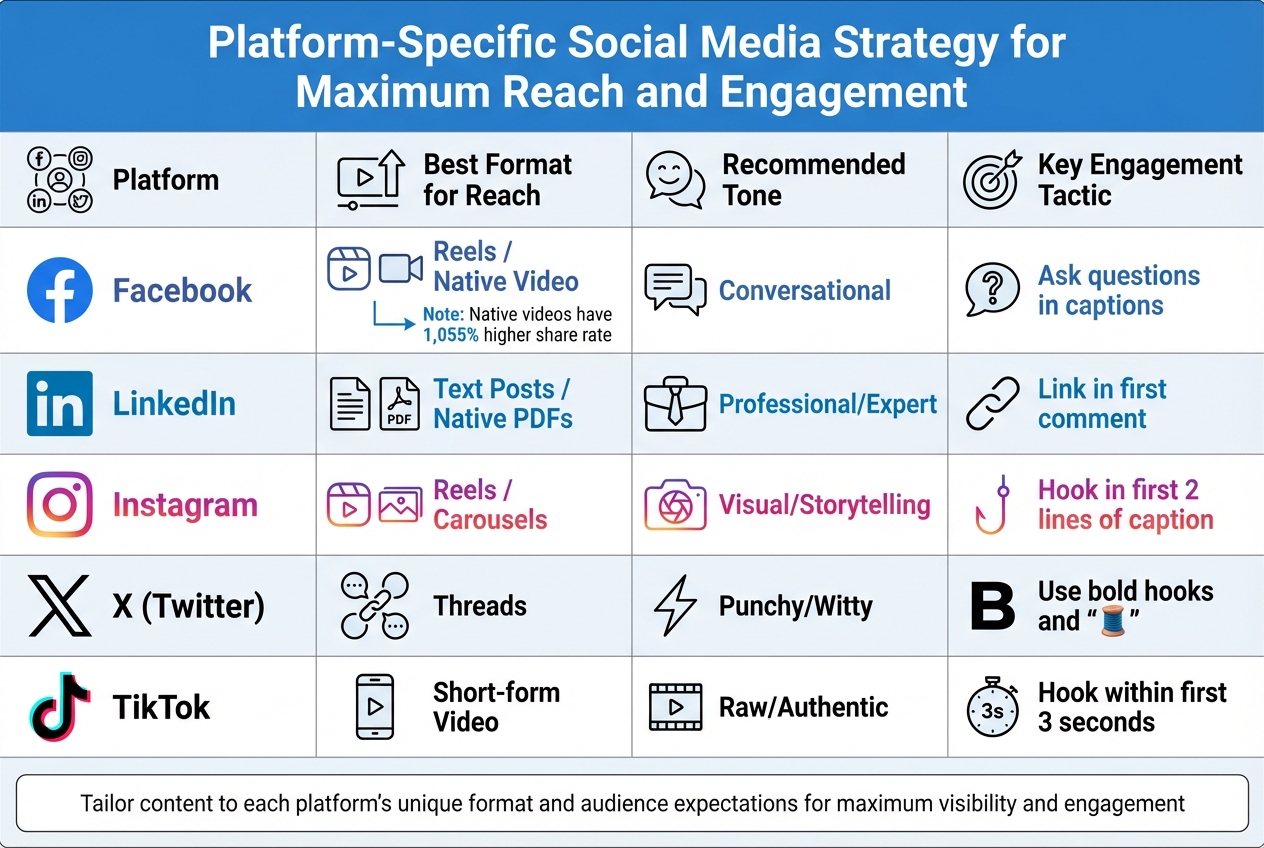
Social Media Platform Content Strategy Guide for SEO and Link Building
Creating great content is just the first step. To truly make an impact, you need to actively promote it on the social platforms where your audience spends their time. Simply publishing and hoping for the best won’t cut it – you’ve got to meet your audience where they are.
As Ross Simmonds, Author and CEO of Foundation Marketing, wisely says:
“Normalize not creating more content when you haven’t promoted the content you created last month”.
The idea here is simple: boost your content’s visibility by reaching two key groups – social media users who might share it and influencers or bloggers who can link back to it. With 42% of marketers reporting that people now prefer discovering brands on social media rather than through Google, your social strategy plays a direct role in how your content gets found and shared.
“We’ve noticed social doesn’t replace backlinks, but it speeds them up. When a page gets early shares and discussion, it’s much easier to earn editorial links because the content already feels validated.” Becky Halls, Strategist at 3Way Social
Adapt Content for Each Platform
Different platforms have different rules, styles, and user behaviors. Sharing the same post across all networks isn’t just lazy – it’s a missed opportunity. Instead, tailor your content to fit the unique vibe and format of each platform.
- LinkedIn: Stick to professional and value-driven posts. Share key takeaways from your content in the post itself and place any external links in the first comment. This avoids penalties from LinkedIn’s algorithm. Native documents like PDFs or slide decks also work well for visual summaries.
- X (formerly Twitter): Break your content into short, engaging threads. Start with a bold statement or insight, use the 🧵 emoji to indicate a thread, and number each tweet to guide readers through your points.
- Instagram: Focus on Reels for reach and carousels for educational content. Make the first two lines of your caption attention-grabbing since text gets cut off after that. Use “Link in bio” for any call-to-action.
- TikTok: Grab attention within the first three seconds. Successful TikToks feel authentic and unpolished, so avoid overly corporate vibes.
- Facebook: Short-form videos like Reels or native video posts perform best. To spark engagement, ask questions in your captions and encourage conversations. Facebook native videos are shared 1,055% more often than other video formats.
- Pinterest: Create vertical graphics that are visually appealing and optimize your board descriptions with relevant keywords.
Here’s a quick summary of platform-specific strategies:
| Platform | Best Format for Reach | Recommended Tone | Key Engagement Tactic |
|---|---|---|---|
| Reels / Native Video | Conversational | Ask questions in captions | |
| Text Posts / Native PDFs | Professional/Expert | Link in first comment | |
| Reels / Carousels | Visual/Storytelling | Hook in first 2 lines of caption | |
| X (Twitter) | Threads | Punchy/Witty | Use bold hooks and “🧵” |
| TikTok | Short-form Video | Raw/Authentic | Hook within first 3 seconds |
Once your content is tailored for each platform, the next step is to actively engage with your audience to amplify its reach.
Interact With Your Audience
Posting is just the starting point – what really drives visibility is engagement. Social media algorithms favor content that sparks interaction, so the more likes, comments, and shares you get, the more likely your post will be shown to a larger audience.
Be quick to respond to comments, especially in the first few minutes after posting. This not only shows you’re engaged but also signals to the algorithm that your content is generating interest. Instead of generic prompts like “What do you think?”, ask specific questions such as, “What’s your favorite strategy for this?” to encourage deeper discussions.
To further boost engagement:
- Run polls or ask for opinions to invite participation.
- Tag influencers or brands mentioned in your content to encourage them to share it with their followers.
- Reach out directly to individuals or companies featured in your content to let them know they’re highlighted.
Brett Helling, Founder of Trendline SEO, sums it up well:
“Social signals may not move the SEO needle directly on Google, but they absolutely create the conditions for SEO success”.
sbb-itb-88880ed
Step 3: Convert Social Engagement Into Backlinks
Once you’ve nailed your social promotion strategies, it’s time to transform that engagement into backlinks. When your content starts gaining attention, leverage that visibility by connecting with influencers, bloggers, and journalists who can link to your content on their websites.
The trick? Focus on content that’s already performing well and reach out to people engaging with it. Build relationships with these individuals – they’re already familiar with your work and more likely to link to it.
Track Social Performance Metrics
As you promote your content, keep an eye on the posts that resonate most by tracking key social metrics. These metrics help you spot content with lasting appeal, making it easier to identify opportunities for backlinks.
- Shares and retweets: When people share your content, it shows they find it valuable enough to pass along to their own audience. This is a clear signal of interest.
- Saves: If users save your posts, it indicates your content has long-term value – a quality bloggers and journalists look for when referencing material.
- Engagement rate: This metric (interactions divided by impressions) reveals whether your content is connecting with a specific audience. Content with high engagement is a strong contender for guest posts or editorial mentions.
- Unlinked brand mentions: Use tools like Mention or Brand24 to track when someone mentions your brand or content without linking back to you. These “warm” leads already know your brand, making them more likely to provide a link.
- Referral traffic: Use UTM parameters to track traffic from social platforms. This helps identify which channels drive visitors to your site and where potential linkers – like bloggers and influencers – are most active.
Connect With Influencers and Bloggers
Your interactions with your audience pave the way for meaningful connections with influencers and bloggers. Once you’ve identified content that’s performing well, reach out to people who can link to it. But don’t jump straight into cold outreach – it rarely works. Instead, warm up your leads first.
Start by engaging with influencers and bloggers on social media. Reply to their posts, share their content, or mention them in your own updates. This builds familiarity and makes your eventual pitch feel more personal. As Paddy Moogan, Co-founder of Aira, explains:
“Arguably, link building these days is more akin to great marketing, and the organizations who understand this are usually the ones who win long term.”
Another effective approach is ego baiting – highlighting influencers in your content. This could be through interviews, expert roundups, or quotes. When you feature someone’s expertise, they’re more likely to share and link to your content, as it enhances their own credibility. For example, digital marketer Richard Marriott interviewed 53 experts for a blog promotion tools roundup. By engaging with these experts on social media, the post generated 237 unique links from 46 root domains and over 1,000 social shares in just six months.
When reaching out, always personalize your messages. Skip the generic templates – address recipients by name and reference specific details about their work or audience. This shows your request isn’t just another automated pitch.
You can also convert sharers into linkers. If someone has already shared your content, they’re an ideal candidate for a backlink request. Monitor your social mentions and reach out to these users, suggesting they add a link to your content from their website or blog.
To simplify this process, platforms like 3Way.Social can help. This tool uses AI to match you with relevant domains and streamline link exchanges. Instead of spending hours hunting for opportunities, 3Way.Social connects you with vetted SEO professionals and websites in your niche, allowing you to focus on creating top-notch content while the platform handles the logistics of securing backlinks.
Step 4: Link Your Social Profiles and Website
To strengthen your SEO efforts, connecting your social profiles with your website is a must. This integration helps verify your brand, boosts traffic, and creates a seamless connection between your social platforms and site. Here’s how you can strategically link them to maximize impact.
Add Links Between Social Profiles and Your Website
Make sure your website URL appears on all your social profiles. Most platforms have a dedicated “website” field, but don’t stop there. Include your URL in “About” sections, bio descriptions, and even pinned posts. For Facebook, use the “Call to Action” (CTA) button below your cover photo to direct users to specific landing pages. On LinkedIn, take advantage of the “Contact Info” section, which lets you add up to three custom links.
For Instagram, switch to a professional account so you can add clickable links in your bio and use the “Link” sticker in Stories. On YouTube, include your website link within the first 25–50 words of your video descriptions. If you’re using Pinterest, verify your site to enable Rich Pins.
Don’t forget the reverse connection – add social icons or feeds to your website. Place them in the footer, sidebar, or anywhere they fit naturally. Tools like Smash Balloon can embed social content directly on your site, which is better for SEO than using iframes. Even though most social links are “nofollow”, Google can still use them as hints for discovery and authority, which contributes to your backlink profile.
Use UTM Parameters to Track Traffic
UTM parameters are small snippets of text you can add to URLs to track where your traffic originates. Without them, social traffic often gets lumped into generic categories like “Social” or “Direct” in Google Analytics 4, making it hard to pinpoint which platform or post is driving results.
To track performance, add UTM codes to your social links. For instance, in your LinkedIn bio, you might use: yoursite.com?utm_source=linkedin&utm_medium=social&utm_campaign=profile_bio. This setup tells you the visitor came from LinkedIn, through a social channel, and from your profile bio specifically. Use lowercase letters and replace spaces with underscores or hyphens to avoid errors. Keep a master spreadsheet of all your UTM codes to stay organized and prevent duplicates. To make long URLs more user-friendly, consider shortening them with tools like Bitly.
Step 5: Track Results and Refine Your Strategy
Once you’ve linked your social profiles to your website, the next step is all about tracking your progress and fine-tuning your approach. Social engagement and quality backlinks are key, but the real value lies in understanding the data and acting on it.
Which Metrics to Monitor
Let’s start with link-building metrics. Focus on tracking referring domains rather than total backlinks. A diverse backlink profile signals trustworthiness and authority. Keep an eye on your Authority Score as well, which helps measure your site’s credibility. Use analytics tools to check these metrics regularly, ideally on a monthly basis.
On the social media side, monitor engagement rates – likes, shares, comments, and saves compared to your follower count. High engagement suggests your content resonates with your audience, increasing the chances of earning quality backlinks. Use Google Analytics 4 to track referral traffic from social platforms and identify which networks are driving visitors to your site. Pay close attention to which platforms bring in the most engaged and valuable traffic.
Don’t forget to measure conversion metrics to tie your social traffic to actual revenue. Lastly, evaluate page-level performance by tracking organic traffic growth and keyword rankings for the pages you’ve actively promoted.
| Metric Category | Key Metrics | Why It Matters |
|---|---|---|
| Link Building | Referring Domains, Authority Score, Anchor Text Distribution | Gauges your site’s credibility and backlink profile health |
| Social Media | Engagement Rate, Reach, Impressions, Audience Growth | Shows how well your content connects with and expands your audience |
| Traffic/SEO | Organic Traffic, Keyword Rankings, Referral Traffic | Measures how social signals and backlinks improve search visibility |
| Business Impact | Conversion Rate, Social Conversions, Revenue | Links your efforts to tangible business outcomes |
With these metrics in place, use the insights to refine your outreach and content promotion strategies.
Make Data-Driven Adjustments
Once you’ve collected data over several months, use it to identify patterns and refine your strategy. Look for the types of content that consistently generate the most shares and backlinks. For instance, if your infographics outperform blog posts, it might be time to focus more on visual content. Similarly, if LinkedIn drives better-quality traffic than Twitter, consider reallocating your promotion budget accordingly.
Here’s a real-world example: In November 2024, Ryan Law, VP of Content Marketing at Ahrefs, shared a research study titled “How Often do AI Assistants Hallucinate Links” on LinkedIn and Twitter. The post gained over 3,000 views on Twitter and was reposted by industry expert Glenn Gabe, earning an additional 5,000 views. This exposure led to nearly 500 backlinks and 19,000 mentions on AI search engines, ultimately helping the article secure the #1 ranking for its target topic.
Another tactic to explore is monitoring unlinked brand mentions, which can be great opportunities to secure backlinks. Keep an eye on your link velocity – the rate at which you’re acquiring backlinks. A sudden spike can raise red flags with search engines, while a steady pace might indicate it’s time to scale up your outreach efforts.
“Link building campaigns can have a real, measurable impact on a client’s business goals – by looking at Google Analytics, we can also see how much traffic a campaign drives into the site or a specific page.” – Aoife O’Connor, Aira
Don’t overlook your toxicity score, which helps identify harmful links from spammy sites. If needed, request link removals or use Google’s disavow tool. Also, review your anchor text distribution – it should look natural. Over-optimized keywords can lead to penalties. Above all, avoid making drastic decisions based on a single post or short-term data. Look for long-term trends, and remember that the impact of link-building efforts often takes 1–3 months to become noticeable.
Conclusion
Social signals and link building are key components of a dynamic, data-informed SEO strategy. Social media platforms extend your content’s reach, connecting it with influential bloggers and journalists who can provide valuable backlinks. The stats are telling: websites with active social media profiles can experience up to 31% more organic traffic, while brands with strong social engagement enjoy a 22% boost in search visibility.
To make the most of this synergy, it’s crucial to view social media and SEO as interconnected elements of a unified strategy. By consistently creating and sharing content that resonates, you generate momentum that builds over time. As SEO expert Sumit Yadav explains:
“While social signals may not be a direct button for search rankings, they are the vital connective tissue that strengthens almost every other aspect of your SEO strategy”.
Backlinks remain one of the top five ranking factors in SEO. However, earning high-quality links depends on visibility, credibility, and relationship-building – all areas where social media plays a significant role. By tracking metrics like branded search volume, engagement rates, and referral traffic, you can fine-tune your approach and focus on the tactics that deliver real results.
For those aiming to scale their link-building efforts, 3Way.Social offers a streamlined solution. Their platform uses AI to match domains and facilitate secure ABC link exchanges, simplifying the process of acquiring high-quality backlinks. Features such as permanent do-follow links, vetted networks, and diversification tools enable you to run a strategic campaign while maintaining a natural and balanced backlink profile that aligns with search engine guidelines.
As discussed throughout this guide, the digital landscape is evolving rapidly. AI-driven search engines increasingly value genuine social signals and brand mentions across platforms like LinkedIn, X, and Reddit. Adopting an integrated, data-driven approach ensures a strong foundation for long-term SEO success.
FAQs
How do social signals impact SEO rankings?
Social signals – like likes, shares, and comments on platforms such as Facebook, Instagram, and LinkedIn – don’t have a direct impact on Google’s rankings. But they can still play a big role in your SEO strategy by indirectly boosting your content’s visibility. When your posts gain momentum on social media, they reach more people, increasing the likelihood of earning backlinks from other websites. And backlinks? They’re one of the most influential factors for search engine rankings.
On top of that, social signals can drive more traffic to your website. This can lead to better engagement metrics, such as longer dwell times and lower bounce rates, which signal to search engines that your content is relevant and valuable. By using tools like 3Way.Social, you can ramp up social engagement and build high-quality backlinks, creating a dynamic combination that strengthens your overall SEO efforts.
How can I make my content more shareable and attractive for backlinks?
To craft content that people want to share and link to, start by centering your efforts on offering value and being original. Create standout assets like in-depth research reports, eye-catching infographics, or detailed how-to guides that address specific challenges your audience faces. Content like this naturally grabs attention and earns backlinks.
Then, tailor your content for social media platforms. Break your main points into bite-sized formats like short videos, carousel posts, or shareable quotes. These formats make it easier for users to engage with and share your content, boosting its reach and driving more traffic back to the original piece.
Lastly, make sharing as simple as possible. Include share buttons, ready-to-use captions, and relevant hashtags to streamline the process for your audience. To take it a step further, consider tools like 3Way.Social. It helps you connect with reliable partners to build high-quality backlinks securely. By combining these tactics, you’ll not only make your content more shareable but also strengthen its SEO performance.
How can I track the success of my social signals and link-building strategy?
Tracking how your social signals and link-building efforts perform is key to sharpening your SEO game. Start by setting clear, measurable goals. Maybe you want to drive more organic traffic, attract new referring domains, or increase sessions coming from social platforms. Defining these objectives makes it easier to track your progress and adjust your strategy.
Keep an eye on essential metrics like social engagement (likes, shares, and comments), referral traffic (use UTM parameters with tools like Google Analytics), and backlink quality (look at unique domains, do-follow ratios, and domain authority). Regularly reviewing these numbers helps you spot trends and understand how your social activity contributes to link equity and traffic growth.
Leverage tools to monitor backlinks and social-driven links, and set aside time for weekly reviews. Compare data on engagement and link-building efforts to see what’s working. Document your findings to fine-tune your strategy, repeat what works, and steadily build your domain authority over time.