EEAT in 2026: the trust and experience signals that actually move rankings
Last Updated on October 19, 2026 by Becky Halls
A gardening site run by someone with no horticulture qualifications pulls in more than half a million organic visits a month. Google trusts it. Readers trust it. And it keeps ranking, right through algorithm updates that flattened plenty of sites with fancier credentials.
And that’s EEAT in 2026 in one example! The letters that win aren’t always the ones you’d expect.
A quick reminder of what E-E-A-T actually is
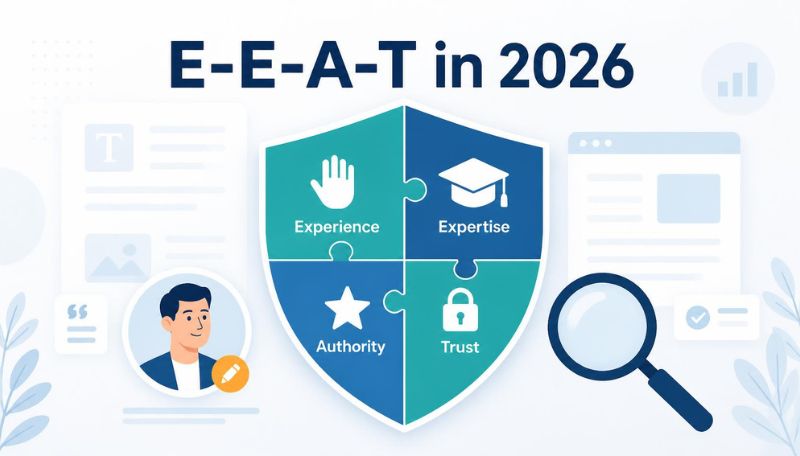
Four things Google’s quality raters look for: Experience, Expertise, Authoritativeness and Trust. It’s not a direct ranking factor, and Google has said that plainly more than once. It’s a description of what good looks like, and the ranking systems are built to approximate it.
Trust is the one that holds the rest up. You can be experienced, expert and well-known, and still rank nowhere if people can’t trust the page. Marie Haynes framed the reader test better than I can: “If you can get people to trust your website thoroughly, then Google really should as well” (Edge of the Web, ep 324). That’s the whole game in one sentence. Build something a stranger would trust, and you’re most of the way there.
Experience is the letter most sites skip
Expertise you can fake with a byline and a bio. Experience is harder, which is why it’s worth leaning on.
Go back to that gardening site. Backlinko points to epicgardening.com pulling an estimated 582,000+ monthly organic visits, run by a founder with no formal horticulture credentials (Backlinko). Why does it work? Because the whole thing reads like someone who’s actually grown the plants. Real photos of real gardens. Specific failures. Advice that only comes from having killed a few tomato plants yourself.
How to show experience on a page
Use your own photos and video, not stock. Backlinko makes the point that stock images are a tell that you don’t have the hands-on experience you’re claiming. A blurry phone photo of the actual thing beats a glossy stock shot every time.
Write in first person about what you did. “When I tested this” and “here’s where it went wrong for me” are experience signals a competitor copying your outline can’t match.
Add specifics only a practitioner would know. The weird edge case. The step the manual skips. That’s the stuff that proves you were there.
Expertise and authority still matter, so prove them properly
NP Digital surveyed 181 SEO experts on which EEAT elements move rankings most. Backlinks and brand mentions came out top, with author credentials rated highly too (Neil Patel / NP Digital). So the author on the page isn’t decoration.
Make your authors real
Give every article a named author with a proper bio. A real person, with a photo, a short note on why they’re qualified to write this, and links out to their wider presence: LinkedIn, their talks, other places they’ve been published or quoted.
“I think brands get obsessed with chasing authority and forget it’s downstream of trust. Nobody hands you authority. You earn it by being right, in public, over and over, until the mentions and the links start showing up on their own. That’s slow and there’s no shortcut, which is exactly why it’s worth so much once you’ve got it.” Ian Naylor, Founder of 3Way.Social
The technical side of trust people forget
A chunk of trust is pure plumbing, and this is where a lot of otherwise good content leaks credibility.
“Half the trust problems I see are technical. No author schema, so Google can’t connect the writer to anything. An Organization markup that doesn’t match the About page. Mixed-content warnings and an SSL cert that lapsed. None of it is glamorous, but it’s the difference between Google being able to verify who you are and Google having to guess. Get the Person and Organization schema right, link your authors with sameAs, and you’ve done more for trust than another 500 words ever would.” Peter Fox, Head of Dev at 3way.social
A short technical trust checklist
- Add
Personschema for authors andOrganizationschema for the site, and keep both consistent with what’s on the page. - Use
sameAsto link authors to their real profiles. - Make sure HTTPS is clean, with no mixed-content warnings and no expired certificate.
- Keep a real, reachable About page and contact details. Google’s raters look for them, and so do nervous buyers.
- Show dates. When something was published and last updated is a trust signal, especially for anything time-sensitive.
What to do if your content feels thin on EEAT
Start with the pages that matter most: the ones about money, health, safety, or anything where bad advice could hurt someone. Those are the YMYL pages Google holds to the highest bar.
For each, ask the Marie Haynes question. Would a sensible stranger trust this page and act on it? If not, work out what’s missing. An author who knows the subject. Sources. First-hand detail. A design that doesn’t look like it was thrown together in an afternoon.
Then fix the worst offenders first and leave the rest. You don’t need to overhaul everything at once. You need your important pages to look like they were written by someone who knows what they’re talking about, because mostly, the ranking follows.
EEAT in 2026 – FAQ
Is EEAT a ranking factor?
No, not directly. Google uses it to describe quality, and its ranking systems try to reward the signals that line up with it. So it’s not a dial you turn, but it absolutely shapes how you rank.
Which letter matters most?
Trust. The other three feed into it. Experience, expertise and authority all exist to make a page trustworthy, and a page nobody trusts won’t rank well however expert it seems.
How do I show experience if I’m writing about something I haven’t personally done?
Get someone who has. Quote a practitioner, co-write with an expert, or interview one and credit them. Borrowed experience, clearly attributed, beats pretending.
Does author schema help rankings?
Not on its own. It helps Google connect your authors to their wider reputation, which supports trust. Think of it as making your expertise legible to a machine.
How long does it take to build EEAT in 2026?
Months, usually. Trust and authority are earned slowly through mentions, links, consistent accuracy and real reputation. The technical fixes you can do this week. The reputation takes a while, which is why starting now matters.
Do small sites stand a chance against big brands here?
Yes, on experience especially. A small site run by someone who actually does the thing can out-trust a big brand churning out generic content. The gardening example proves it.
Peter Fox leads the dev team at 3way.social, where he spends his days on the technical side of SEO: schema, site performance, and the plumbing that makes content trustworthy to search engines.