5 Signs of Unethical Link Building
Five red flags of unethical link building—paid links, link farms/PBNs, excessive exchanges, comment spam, and over‑optimized anchor text.
Last Updated on May 6, 2026 by Becky Halls
Unethical link building can destroy your SEO efforts. It violates search engine rules, leading to penalties, traffic drops, and wasted resources. Here’s what to watch out for:
- Buying Links: Paid links violate Google’s policies and can lead to penalties or nullified rankings.
- Excessive Link Exchanges: “You link to me, I link to you” schemes often appear manipulative and risk devaluation.
- Link Farms & PBNs: Networks designed to manipulate rankings are easily detected and penalized.
- Comment Spam: Flooding forums or blogs with irrelevant links damages credibility and offers no SEO value.
- Over-Optimized Anchor Text: Repeated exact-match keywords signal manipulation and trigger penalties.
Key takeaway: Avoid shortcuts. Ethical link building is the only way to achieve sustainable SEO success.
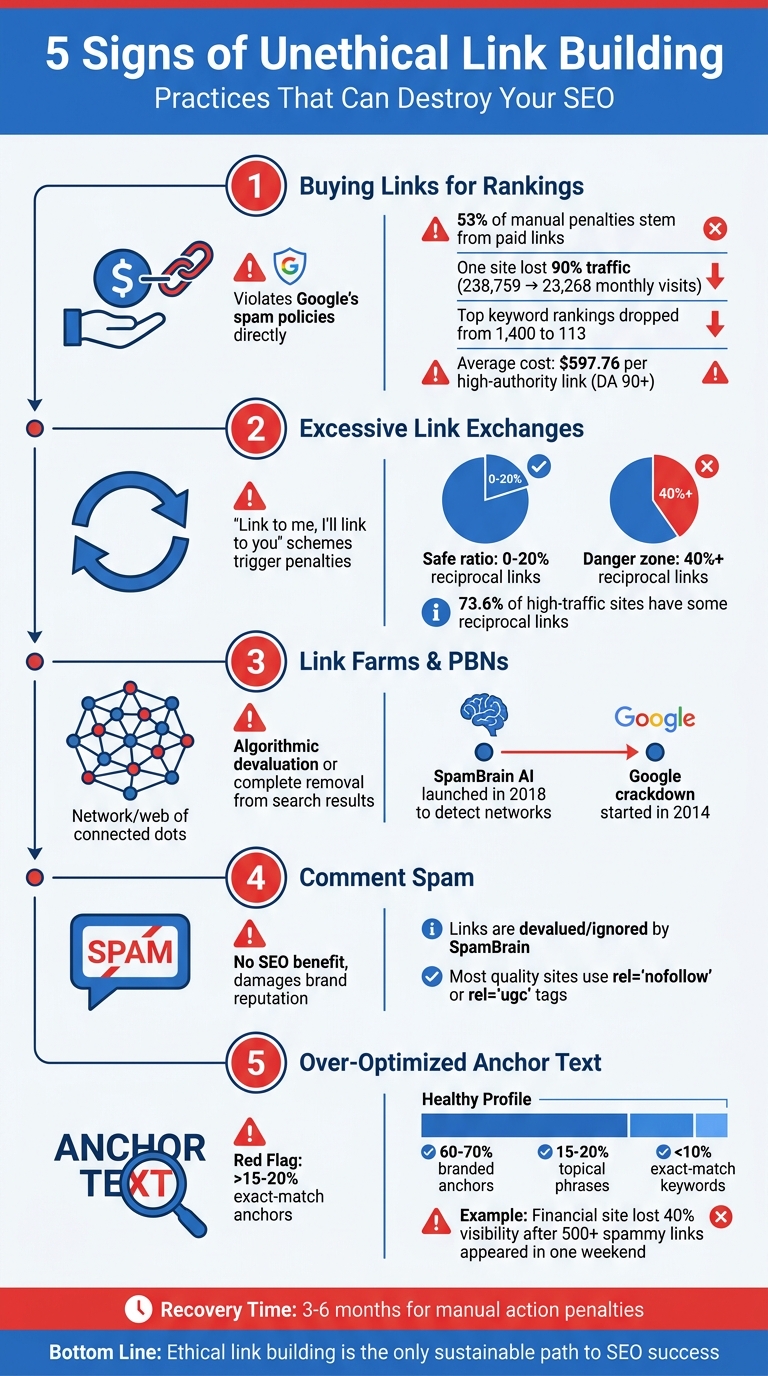
5 Signs of Unethical Link Building and Their Consequences
These 4 Black Hat SEO Tactics Still Work (But Cost You Everything Fast)
sbb-itb-88880ed
Sign 1: Buying Links for Rankings
Paying for links to improve rankings goes directly against Google’s spam policies. According to Google, any link designed to manipulate search rankings qualifies as link spam. This includes exchanging money for backlinks, ABC link exchanges, offering products or services in return for links, or publishing sponsored guest posts without proper disclosure tags.
Examples of this behavior include buying spots in low-quality directories that lack editorial oversight or paying for guest posts on sites advertising “Write for Us” pages. These directories are often easy to spot – they typically have outdated HTTP protocols and poorly designed navigation.
Now, let’s look at the risks tied to purchasing links.
Risks of Paid Links
Paid links are not only a waste of money but also a gamble with penalties. Google’s SpamBrain AI system actively detects and nullifies purchased links, rendering them useless for improving rankings. In more severe cases, your site could be hit with a manual action from Google’s webspam team. This could result in your site being heavily suppressed in search results – or even removed entirely.
One example highlights the danger: a website’s organic traffic plummeted from 238,759 monthly visits to just 23,268 – a staggering 90% drop – after receiving an unnatural links warning. On top of that, the site’s top three keyword rankings fell from over 1,400 to just 113. Studies also show that around 53% of manual penalties stem from paid links, especially those using overly optimized, keyword-heavy anchor text.
Beyond penalties, manipulative link-building practices can erode trust signals. This could exclude your site from advanced search features like Google AI Overviews or ChatGPT results.
How to Identify Paid Links
Spotting paid links is critical to maintaining your SEO health. Start by auditing your anchor text – if more than 15–20% of your links use exact-match keywords, this could indicate a problem.
Look out for signs of Private Blog Networks (PBNs), such as shared IP addresses, identical website templates, or clusters of links pointing to the same sites. Another red flag is a site with high Domain Authority but declining organic traffic. If referring domains grow rapidly while traffic decreases, the links are likely purchased.
Pay attention to link placements as well. Links found in footers, sidebars, or “sponsored” sections without proper rel tags are often paid for. Geographic mismatches are another warning sign – if your US-focused business receives backlinks from sites whose traffic is mostly from unrelated countries, those links may be suspect.
To avoid penalties, always use proper disclosure tags for any paid or sponsored links. If you’ve already purchased links, make sure to document your removal efforts thoroughly. Google requires this documentation if you need to submit a reconsideration request.
Sign 2: Excessive Link Exchanges
Link exchanges become a red flag when websites trade backlinks purely to manipulate SEO rankings. Google explicitly categorizes this behavior as spam, stating:
Excessive link exchanges (‘Link to me and I’ll link to you’) or partner pages exclusively for the sake of cross-linking.
The distinction lies in intent. A natural link is an editorial decision based on the quality of content, while manipulative exchanges are orchestrated solely to transfer authority.
Interestingly, data reveals that 73.6% of high-traffic websites engage in reciprocal linking to some degree, and 43.7% of top-ranking Google pages show overlapping reciprocal links. However, even high-authority sites like the Ahrefs blog maintain a balanced approach, with a reciprocal link ratio of about 19.25%. This demonstrates that mutual linking can happen organically when quality content is involved. The challenge is knowing when link exchanges cross the line.
What Makes a Link Exchange Excessive?
To assess whether link exchanges are excessive, calculate your reciprocity ratio – the percentage of domains that mutually link to each other compared to all referring domains. A ratio between 0–20% is generally considered safe, while a ratio above 40% falls into the danger zone, signaling a high risk of penalties.
Placement is another critical factor. Links embedded in footers, sidebars, or sitewide widgets – rather than within the context of unique content – can suggest manipulation. Additionally, acquiring 10 or more reciprocal links in a short timeframe creates an unnatural pattern that could raise red flags. Geographic or topical mismatches, such as a plumbing website linking to a recipe blog, are also strong indicators of spam. Monitoring these factors is essential for staying compliant.
Consequences of Excessive Link Exchanges
Excessive link exchanges can lead to algorithmic devaluation or manual penalties. This might result in nullified link equity or even removal from search results. Google’s stance is clear:
Links obtained primarily for artificial manipulation of Search rankings are link spam. Our algorithms and manual actions aim to nullify these unnatural links at scale.
The repercussions aren’t limited to traditional search. By 2026, AI-powered search tools like Google’s AI Overviews will evaluate authority and trust signals more comprehensively. Repeated patterns of manipulative linking could exclude your site from AI-generated answers and summaries.
To safeguard your site’s profile, regularly audit outbound dofollow links and compare them with inbound referring domains to identify overlaps. Ensure mutual links are contextually relevant and embedded within meaningful content. If compensation is involved in an exchange, always use rel=”nofollow” or rel=”sponsored” attributes to stay compliant.
Sign 3: Links from Link Farms or Private Blog Networks
This warning sign emphasizes how link farms and Private Blog Networks (PBNs) violate ethical link-building practices. These setups are designed to manipulate search rankings. A PBN is essentially a group of websites controlled by one entity, created to artificially boost the ranking of a specific “money site”. Similarly, link farms exist solely to generate backlinks using unnatural linking patterns. Often, these networks rely on expired domains with prior authority, reviving them with irrelevant or low-quality content. Many use AI-generated or scraped material, which Google’s systems can detect as low-value. To combat this, Google introduced SpamBrain in 2018, an AI-powered tool that identifies spammy networks and nonsensical content.
How to Identify Link Farms and PBNs
Spotting these networks requires paying attention to technical and content-related clues. For example:
- Many PBN sites share the same IP address, hosting provider, or subnet, and often reuse tracking codes (like GA4 or AdSense IDs), which hint at shared ownership.
- These sites often feature thin, scraped, or AI-generated content that lacks real substance.
- A sudden shift in a site’s focus – like moving from gardening tips to promoting gambling or pharmaceuticals – is another red flag.
- Suspicious linking patterns are common, with PBNs heavily interlinking their sites to funnel link equity while linking to irrelevant industries.
Low organic traffic and poor user engagement also signal potential issues. To dig deeper, export your referring domains and find backlinks Google has flagged from unrelated industries. Tools like RDAP or WHOIS lookups can reveal shared registration details. A manual review of site layouts – such as identical templates, footers, or CSS styles – can also uncover network connections.
Penalties for Using Link Farms
Recognizing these signs is critical because relying on such networks can result in severe penalties. Google categorizes these tactics as link schemes under its spam policies. The consequences include algorithmic devaluation, manual actions, or even complete removal from search results. Once detected, Google’s systems can devalue all links from the network at once, causing a sudden and steep drop in rankings. Manual penalties are even more damaging, as they involve a direct review by Google, which can result in sanctions for unnatural links, thin content, or major spam issues. Google first took significant action against PBNs in 2014, and enforcement has only grown stricter since.
As LinkPanda points out:
PBN links that appear to be working today carry accumulated risk that materializes suddenly rather than gradually.
This means your rankings might seem stable for months but could disappear overnight if the network is detected. Curtis Weyant from Search Engine Land explains:
The chances of building a PBN that passes link value to your website before Google finds it are almost zero.
Beyond penalties, PBNs fail to contribute to the essential qualities of Experience, Expertise, Authoritativeness, and Trustworthiness (E-E-A-T), which are critical for long-term rankings, especially in sensitive niches like health and finance. If you’re hit with a manual action, you’ll need to identify and remove problematic links and may have to use Google’s Disavow Tool as a last resort. The financial investment in expired domains, hosting, and content creation becomes a sunk cost once the network is flagged. While PBN links may seem cost-effective upfront, they only delay inevitable consequences, making them a risky and unsustainable strategy. Steering clear of such networks is essential for building a reliable and lasting backlink profile.
Sign 4: Comment Spam and Forum Links
Comment spam is a blatant way to try and manipulate search rankings, but it often backfires. This tactic involves flooding blog comments, forum threads, guestbooks, or user signatures with links – typically using bots to post them in bulk. While the goal is to quickly build backlinks, Google’s SpamBrain easily identifies these links and ignores them, meaning they provide no SEO benefit. Beyond being ineffective, this approach can waste your time or disrupt your link-building efforts and harm your brand’s reputation in online communities.
How Comment Spam Impacts SEO
Search engines are highly effective at spotting spammy links. As Google puts it:
Links obtained primarily for artificial manipulation of Search rankings are link spam.
Instead of penalizing entire sites, Google’s algorithms usually devalue or ignore these links. SpamBrain specifically deindexes the pages it flags as spammy, rather than applying a site-wide penalty. That said, large-scale or systematic spamming can still result in a manual action for unnatural links, which could tank your rankings or even remove your site from search results altogether.
On top of that, aggressive comment spam can lead to deleted posts, account suspensions, and a tarnished reputation. Most quality forums and blogs now use rel=”nofollow” or rel=”ugc” tags on outbound links, ensuring that spam links don’t contribute to search rankings. The bottom line? This outdated tactic is not only ineffective but also risky.
How to Spot Spammy Forum Links
Identifying spammy links often comes down to noticing patterns of manipulation. Here are some common signs:
- Over-optimized anchor text: Links using commercial keywords like “buy cheap insurance” or “best SEO services” instead of natural brand names or phrases are a red flag.
- Automated patterns: Generic, repetitive comments that lack any editorial context often indicate bot activity.
- Irrelevant placement: Links dropped into unrelated discussions – like a financial services link in a gardening forum – are clear signs of spam.
- Signature and profile stuffing: When links are crammed into user profiles, forum signatures, or guestbooks without adding value to the conversation, it’s a telltale sign of unethical tactics.
- Sudden backlink spikes: Receiving an unusually high number of links in a short time (especially from unrelated or foreign-language forums) often points to bot-driven spam.
These patterns highlight the difference between genuine, editorially-approved links and those generated through manipulative, automated methods. Recognizing these signs can help safeguard your SEO efforts and manage backlinks more effectively and maintain your brand’s credibility.
Sign 5: Automated or Over-Optimized Anchor Text
Building links ethically means steering clear of shortcuts like automated tools or keyword-stuffed practices. Using bots to generate backlinks or cramming anchor text with exact-match keywords is a surefire way to get flagged by Google’s spam filters. While these methods might seem like an easy path to higher rankings, they create unnatural link patterns that search engines can easily detect – and penalize. Automated link-building tools churn out low-quality links without genuine editorial value, while over-optimized anchor text (e.g., “buy cheap insurance” repeated excessively) screams manipulation rather than authentic endorsement.
Why Over-Optimized Anchors Are a Red Flag
Over-optimized anchors are another clear sign of unethical link-building practices. Search engines assess whether a link is a genuine editorial choice or an attempt to game the system. When most of your backlinks use identical, keyword-stuffed phrases instead of natural brand names or URLs, it signals manipulation.
A healthy backlink profile typically includes:
- 60–70% branded anchors
- 15–20% topical phrases
- Less than 10% exact-match keywords
If exact-match anchors exceed 15–20%, it suggests a manipulative pattern. This kind of over-optimization not only diminishes link quality but also increases the risks associated with automated link-building.
The Dangers of Automated Link Building
Automated link-building tools generate unnatural patterns that search engines can easily detect. These tools promise quick results but often create toxic links that provide no real SEO benefit. Google’s SpamBrain, for example, analyzes the speed at which links are built and the anchor text patterns to identify automated activity. Instead of penalizing sites outright, modern algorithms often just ignore these links, rendering them useless.
Consider this example: In January 2026, a financial services company saw its organic visibility plummet by 40% in just two weeks after more than 500 backlinks appeared over a single weekend. These links came from low-quality directories in Eastern Europe and Asia, featuring foreign-language anchor text and exact-match commercial keywords. Similarly, an ecommerce retailer faced a manual penalty after over 1,000 spammy backlinks from adult content sites appeared in a short timeframe. These links all used over-optimized anchor text matching the site’s main keywords. The retailer managed to recover its rankings within 45 days by submitting a disavow file and a reconsideration request.
To avoid these pitfalls, regularly check Google Search Console’s “Top linking text” report for signs of over-optimization. Watch for spikes in specific anchor text or identical phrases across multiple domains. If you spot these patterns, focus on earning high-quality editorial links with branded or URL anchors to balance your profile. And remember: steer clear of any service that promises a large volume of backlinks quickly. These services almost always rely on automation that could jeopardize your entire site.
Building Links Ethically with 3Way.Social
Once you’ve spotted the warning signs of unethical link-building practices, it’s time to focus on methods you can trust. 3Way.Social provides an AI-driven platform designed to facilitate ethical link building through secure ABC link exchanges. This method creates a triangular linking structure: Site A links to Site B, Site B links to Site C, and Site C links back to Site A. By avoiding direct link swaps, this approach helps maintain a natural and balanced link profile.
With AI-powered domain matching, the platform ensures you’re paired only with websites that align with your niche. Every domain involved is thoroughly vetted for quality and authority, guaranteeing that the links you build are permanent, do-follow, and provide real SEO value. This setup supports the natural editorial intent that’s critical for safe and effective link-building strategies.
Key Features of 3Way.Social
The platform comes equipped with a user-friendly dashboard that simplifies the entire link-building process. From adding your domain to discovering vetted partners and managing exchanges, everything happens in one place. Advanced filters let you find opportunities based on domain authority, relevance, and traffic. Plus, secure guest posting allows you to earn high-quality backlinks by contributing valuable content to relevant sites, steering clear of the automated, manipulative tactics many platforms rely on.
To keep your backlink profile healthy, 3Way.Social offers advanced link diversification tools. These tools help distribute links across various domains and anchor text variations, avoiding patterns that could trigger spam filters. The platform also includes flexible exchange options and secure payment integration, giving you full control over your strategy while staying far from black-hat practices.
3Way.Social Pricing Plans
3Way.Social offers flexible pricing options to suit a wide range of SEO needs.
| Plan | Price | Key Features | Best For |
|---|---|---|---|
| Free Plan | $0 | Add domain, discover link partners, earn/spend credits | Testing the platform and small-scale link building |
| Premium Plan | Custom | All free features plus advanced filters, guest posting, priority support | SEO professionals managing multiple clients |
| Enterprise Plan | Custom | All premium features, custom integrations, dedicated account management | Large-scale SEO operations with specific requirements |
The Free Plan lets you dive into ethical link building without any upfront costs, making it perfect for testing the platform or starting small. For more advanced needs, the Premium and Enterprise plans offer tailored pricing based on your usage, ensuring you only pay for the features that align with your goals. Whether you’re managing clients or running a large-scale operation, there’s an option to fit your strategy.
Conclusion
Using unethical link-building tactics – like buying links, excessive link exchanges, link farms, PBNs, comment spam, or automated anchor text – can lead to severe penalties and significant drops in rankings. Google’s advanced AI systems, including SpamBrain, are designed to detect and neutralize manipulative links on a large scale, ultimately making such investments a waste of time and money.
Links obtained primarily for artificial manipulation of Search rankings are link spam. Our algorithms and manual actions aim to nullify these unnatural links at scale. – Google
The financial burden of unethical link building is no small matter. For instance, the average cost of a paid link on a high-authority site (DA 90+) is around $597.76. If your site is hit with a manual action, recovery can take anywhere from three to six months of intensive effort. On top of that, engaging in shady link-building practices could prevent your site from appearing in AI-powered search tools like Google AI Overviews, ChatGPT, and Perplexity.
Ethical link building is the smarter, long-term approach. As Google explains, “A natural link is an editorial choice”. Services like 3Way.Social make ethical link building easier by offering secure ABC link exchanges and tools to diversify your backlink profile while staying within Google’s rules. By steering clear of manipulative strategies, you can focus on methods that promote sustainable growth and build genuine authority.
The risks of unethical practices make it clear: as we move forward, investing in ethical link-building strategies is the only way to ensure lasting success and avoid the pitfalls of outdated, manipulative tactics.
FAQs
How can I tell if my backlinks are paid or unnatural?
To spot paid or unnatural backlinks, watch for indicators such as over-optimized anchor text, links from irrelevant or low-quality websites, suspicious link exchanges, or placements that don’t fit naturally within the content. Conduct regular audits of your backlink profile to identify and address harmful links, helping you maintain an ethical SEO strategy and avoid potential penalties.
What should I do if Google flags my site for unnatural links?
If Google flags your site for unnatural links, here’s what you should do:
- Identify harmful links: Start by reviewing your backlink profile to pinpoint any suspicious or low-quality links.
- Remove or disavow them: Try to have these links removed. If that’s not possible, use Google’s Disavow Tool to tell Google to ignore them.
- Monitor your links regularly: Keep an eye on your backlink profile to ensure it stays clean and healthy.
To prevent this from happening again, stick to ethical link-building methods. Platforms like 3Way.Social can help with secure, vetted link exchanges.
What’s a safe anchor text mix for an ethical backlink profile?
A well-rounded anchor text mix combines branded, generic, and descriptive text. This strategy keeps your anchor text from being over-optimized while ensuring it stays relevant to the content it links to. By maintaining variety, you create a backlink profile that appears natural and aligns with ethical SEO practices.