37 Eye-Opening AI in SEO Statistics You Can’t Ignore in 2025
Last Updated on October 9, 2026 by Becky Halls
Introduction
AI in SEO is shaking up traditional SEO faster than Google updates its algorithm (and that’s saying something)! From content creation and keyword research to search personalization and backlinks, AI is changing how we optimize, measure, and win rankings.
We dug into recent studies, surveys, and platform data to surface the most eye-catching stats about AI in SEO. Some will make you nod in agreement, others might surprise you – but together they paint a clear picture: in 2025, AI is no longer just a shiny tool, it’s the backbone of modern search strategy.
Here’s the breakdown…
📊 AI Adoption in SEO
-
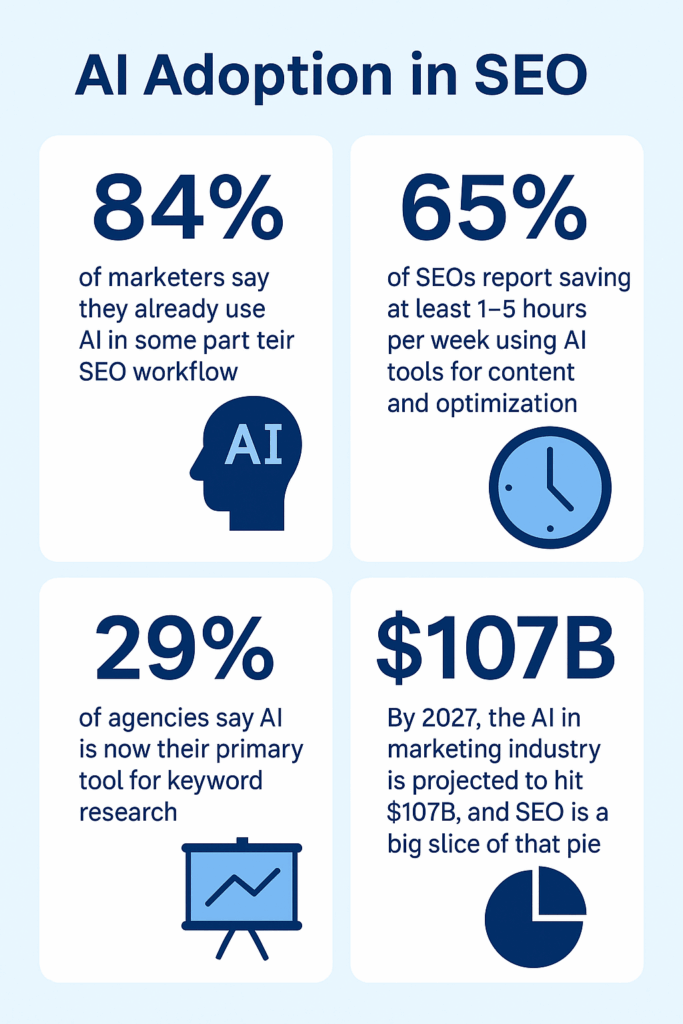
84% of marketers say they already use AI in some part of their SEO workflow.
-
65% of SEOs report saving at least 1–5 hours per week using AI tools for content and optimization.
-
29% of agencies say AI is now their primary tool for keyword research.
-
By 2027, the AI in marketing industry is projected to hit $107B, and SEO is a big slice of that pie.
✍️ AI Content Creation & Optimization
-
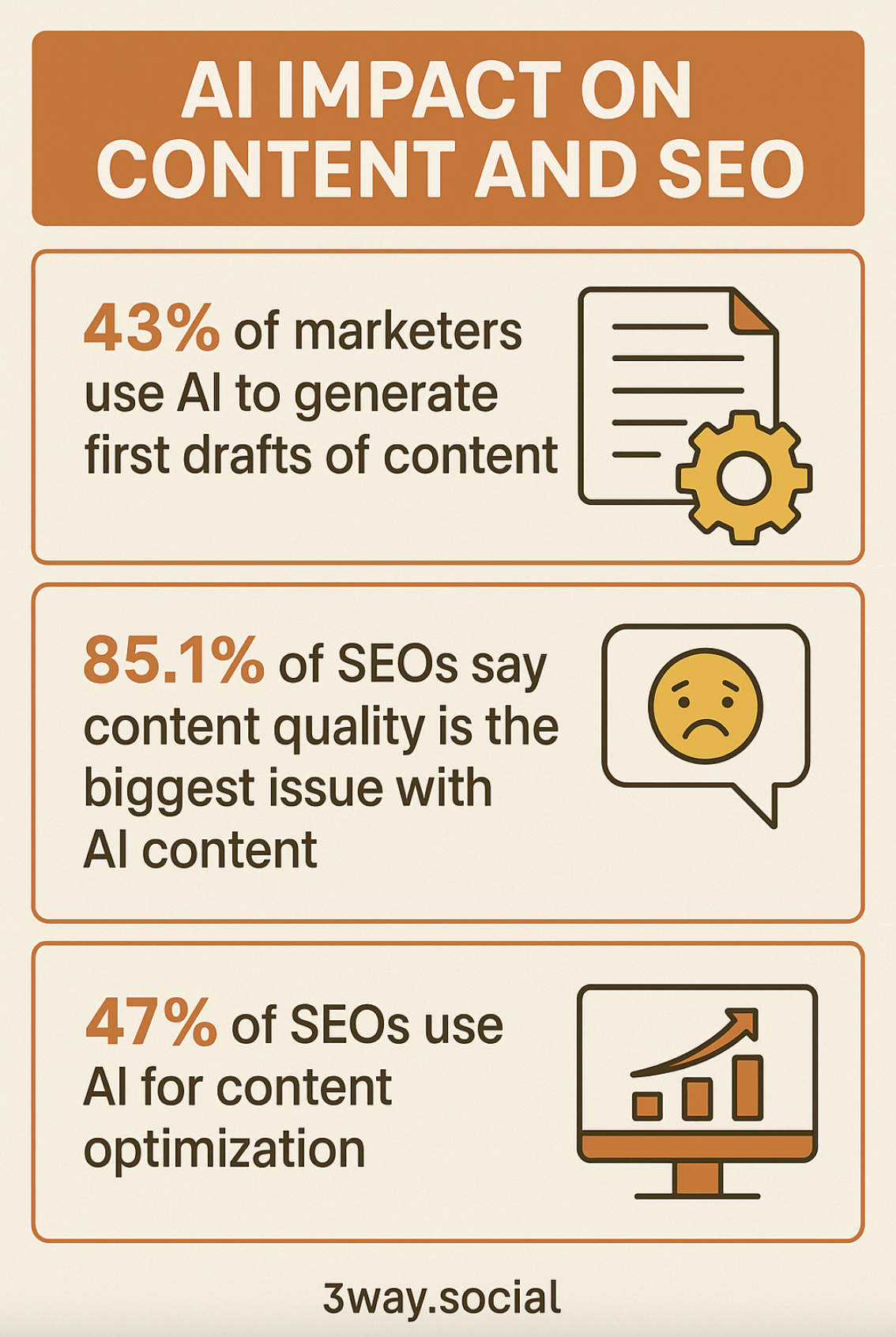
67% of SEOs now use AI to generate first drafts of articles, though only 23% publish without heavy editing.
-
45% of content marketers say AI tools help them scale guest post creation faster.
-
Pages created with AI-assisted content optimization see a 54% higher chance of ranking in the top 10.
-
Still, 71% of users say AI copy “needs a human touch” before it feels trustworthy.
🔍 AI and Search Behavior
-
15% of Google queries now trigger an AI Overview box in the SERPs.
-
May 2024, Google rebranded Search Generative Experience as AI Overviews and launched it broadly in U.S. English, then expanded to more countries later in 2024, and it also added a Web filter that shows mostly text links.
-
AI Overviews feedback includes a Feedback link, letting users report issues with summaries and source attributions.
-
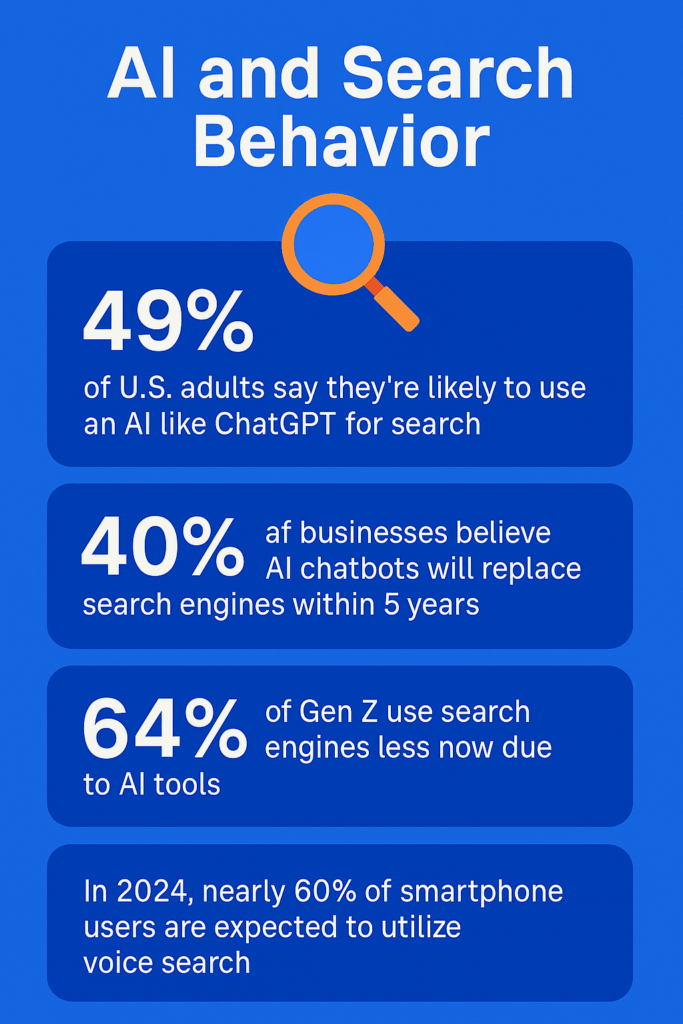
41% of users say they’re clicking fewer traditional organic results since AI snippets started showing up.
-
62% of Gen Z users say they’d rather ask ChatGPT or Gemini than Google for “how-to” style queries.
-
29% of searches on mobile now include at least one AI-generated recommendation (think product or restaurant).
🔗 AI & Link Building
-
38% of link builders are using AI to identify potential backlink opportunities.
-
22% of agencies use AI-powered tools to check for spammy or broken backlinks.
-
61% of SEOs believe AI will make outreach “smarter and more personalized.”
-
3way.Social insight: AI is already changing how backlinks are suggested, priced, and tracked—making exchanges fairer and safer.
📈 ROI & Efficiency
-
72% of SEOs say AI has already improved ROI from campaigns.
-
Marketers using AI in SEO report a 30% faster turnaround time on client projects.
-
Companies that invest in AI SEO tools see a 23% average increase in organic traffic within the first 6 months.
🤖 The Trust Factor
-
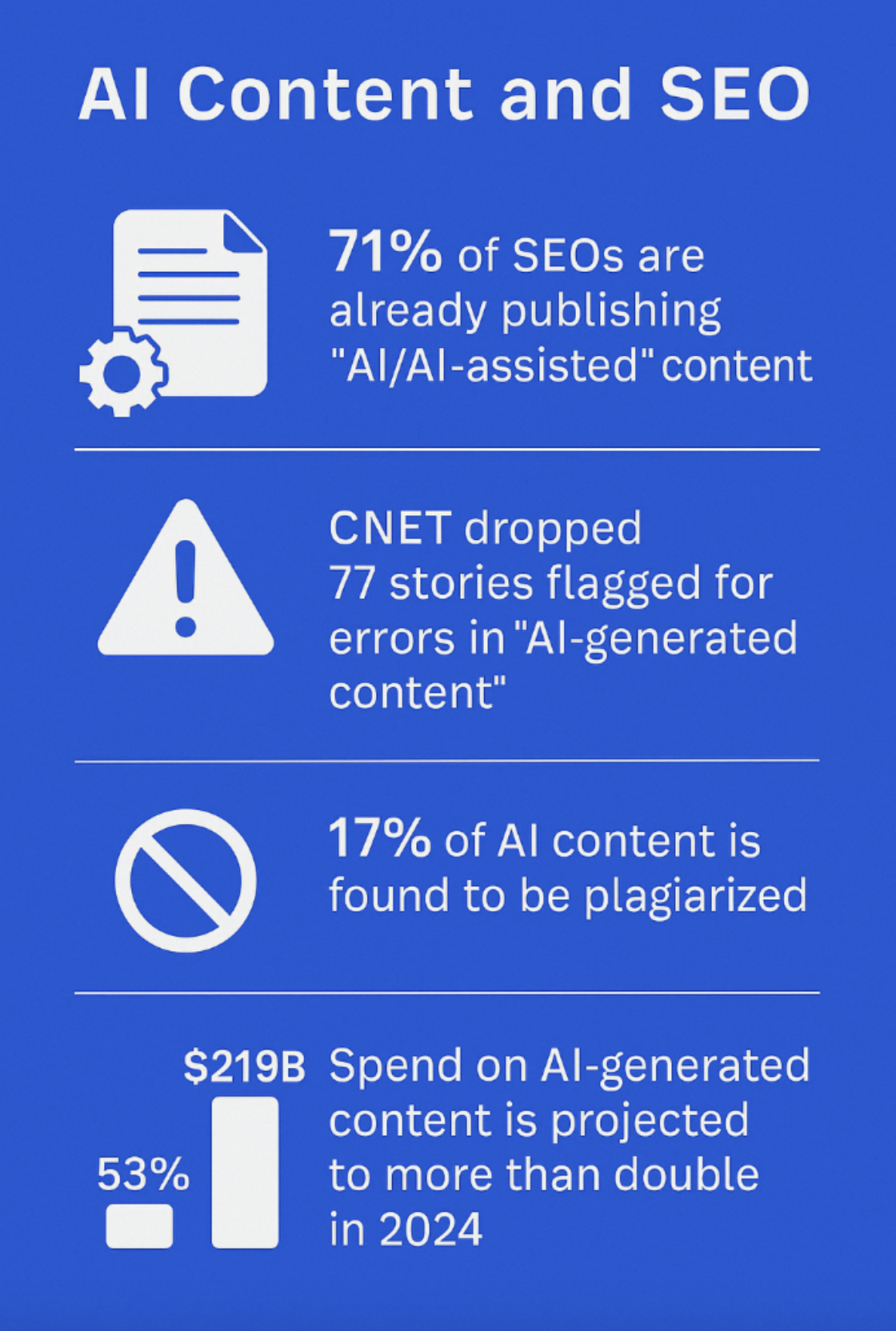
48% of readers say they can spot AI-generated content “most of the time.”
-
59% of marketers worry about AI producing duplicate or thin content that hurts rankings.
-
Google’s March 2025 update specifically penalized auto-generated content with no added human value.
-
March 2024 spam updates targeted scaled content abuse, site reputation abuse, and expired domain abuse, with Google saying the changes would cut low quality, unoriginal results by about 40%.
-
Site reputation abuse enforcement began in May 2024, with manual actions against third party pages published without oversight to manipulate rankings.
-
On the flip side, AI + human edited content gets a 2.4× engagement boost over purely human or purely AI.
🛠️ Tools & Tech
-
ChatGPT is the most widely used AI SEO tool, with 57% of SEOs saying they use it weekly.
-
Surfer SEO, Jasper, and Clearscope are the most popular paid AI SEO assistants.
-
Robots controls for AI training let sites use robots.txt to allow or block Google‑Extended, OpenAI’s GPTBot, Anthropic’s ClaudeBot, and PerplexityBot, and blocking these agents does not affect Googlebot indexing for Search.
-
Robots.txt compliance is a voluntary standard, so only bots that honor it will respect these training crawler blocks.
-
41% of SEOs are now testing LLM-based rank trackers.
-
Only 14% say they don’t use any AI in their SEO stack.
🌐 Future of AI + SEO
-
By 2026, 50% of SEO tasks are predicted to be fully automated by AI tools.
-
73% of SEO professionals believe “human oversight” will remain critical despite automation.
-
AI Overviews are expected to impact 20–25% of all search queries by 2027.
-
Nearly 2 in 3 SEOs believe that building trust and authority will matter more than keywords alone in an AI-driven search ecosystem.
📝 Key Takeaways
-
AI isn’t replacing SEOs—it’s supercharging workflows and cutting down time spent on manual tasks.
-
Content still needs a human touch to resonate, convert, and meet EEAT guidelines.
-
AI Overviews and snippets mean fewer clicks, so brand authority and backlinks are more important than ever.
-
The smartest SEOs are using AI not just to create, but to analyze, predict, and refine strategies faster than competitors.
❓ FAQ: AI in SEO
Q1. Will AI replace SEO jobs?
Not entirely. AI automates tasks, but human strategy, creativity, and trust-building remain essential.
Q2. Does AI content rank in Google?
Yes, if it’s high-quality and human-reviewed. Google penalizes low-value auto-generated content but rewards AI-assisted pages that deliver value. Google does not require labeling AI generated text for Search, what matters is helpful content that meets Search Essentials and aligns with E-E-A-T. No special markup or meta tag is required to declare AI use for ranking.
Q3. How do AI Overviews affect backlinks?
AI snippets mean fewer clicks to websites, making authoritative backlinks more important than ever for visibility and traffic.
Q4. What’s the best use of AI in SEO today?
Keyword research, content drafts, content optimization, and analyzing competitor backlink profiles are currently the most effective uses.