Link Exchange Value Calculator
Curious if a link exchange is worth it? Use our free calculator to compare website value and get a fair partnership recommendation!
Last Updated on November 13, 2025 by Becky Halls
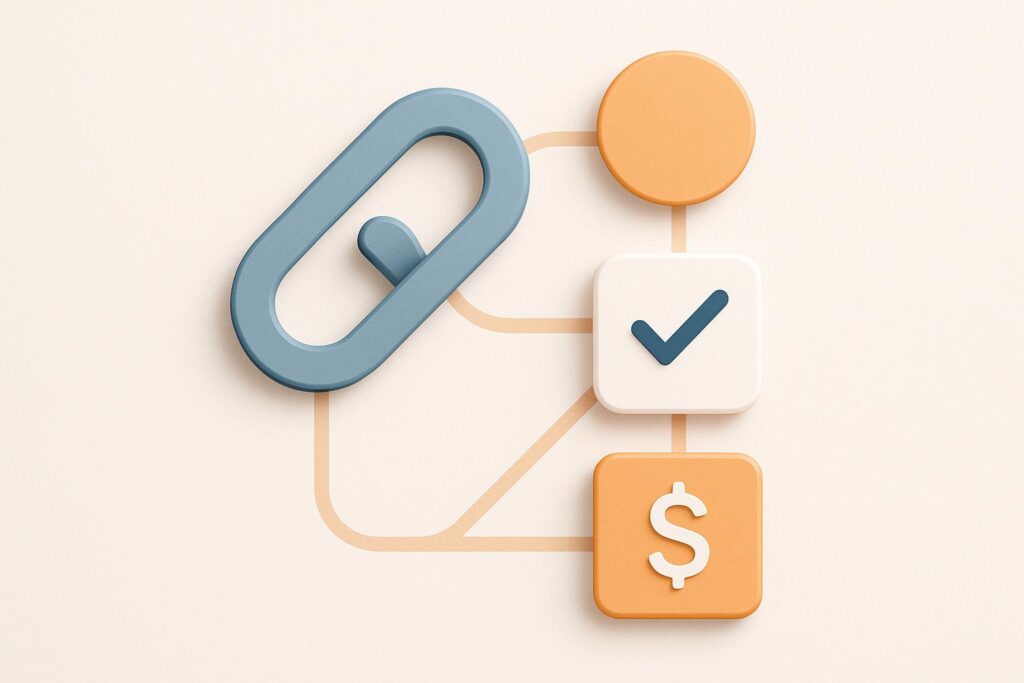
Unlock Smarter SEO with a Link Exchange Value Calculator
Link-building remains a cornerstone of effective SEO, but not every partnership delivers equal benefits. If you’ve ever wondered whether swapping links with another site is a smart move, a tool designed to evaluate website partnership value can be a game-changer. By comparing critical metrics like domain authority, traffic, and backlink strength, you can avoid lopsided deals that hurt your rankings.
‘Google’s systems now evaluate the full context of a link, not just the domain score or anchor text. Relevance and authenticity matter more than ever.’
— John Mueller, Google Search Advocate
In our experience, the quickest ranking gains happen when two sites share complementary content. When both domains reinforce each other’s topical signals, the exchange behaves more like a relevance amplifier than a simple backlink.
What DA and DR Really Measure (and What They Don’t)
Domain Authority is a Moz metric scored 0 to 100, derived from a site’s link profile and used for comparison, not as a Google ranking factor. Domain Rating is an Ahrefs metric, also 0 to 100, that estimates the strength of a site’s backlink graph relative to others. Treat both as third-party proxies and pair them with traffic, topical relevance, and content context to judge a fair exchange.
Why Link Exchanges Matter
A well-chosen link exchange can drive targeted visitors and signal credibility to search engines. However, a poor match – say, with a low-quality or irrelevant site – might do more harm than good. That’s where data-driven evaluation comes in. Instead of relying on gut feelings, you can use precise calculations to weigh the potential of a collaboration. This approach saves time and ensures your efforts focus on connections that truly elevate your online presence.
Stay Within Google’s Link Guidelines
Google’s spam policies flag excessive reciprocal linking and large-scale link exchanges as link schemes that can be ignored or acted on. Use rel=”sponsored” for any link involving compensation, and apply rel=”nofollow” or rel=”ugc” where appropriate to signal intent. Since 2019, Google treats nofollow as a hint rather than a directive, so these links are unlikely to pass ranking signals.
‘Not all links are created equal. A single relevant link from a trusted site can outperform hundreds of high-DR links with no topical alignment.’
— Ahrefs, 2025 SEO Industry Study
From analysing thousands of exchanges inside 3way.Social, we’ve learned that even modest DR sites can produce outsized SEO impact when the topical fit is strong and the content context is natural. A recent Backlinko analysis found that over 55 percent of top-ranking pages received their strongest boost from links within their exact topical niche, not from general high-authority domains.
Make Informed Decisions
Whether you’re a small business owner or a pro marketer, understanding the balance of a link swap is key. Tools that break down SEO metrics into actionable insights empower you to negotiate better terms or walk away from risky offers. Next time you’re considering a partnership, let hard data guide your strategy for maximum impact.
Before you agree to a swap, confirm the partner URL returns HTTP 200, is indexable, and is not blocked by robots.txt or meta robots. Check that your link will appear in visible, crawlable main content, not only in a sidebar, footer, or script. Align expectations on rel attributes and anchor text, so the placement supports equity, referral traffic, and topical signals.
After placement, track referral traffic and engaged sessions from the partner domain in GA4, and add UTM parameters if you need campaign-level clarity. In Google Search Console, use the Links report to verify acquisition, inspect top linking text, and confirm the target page is being crawled. Watch impressions and clicks for that page across relevant queries to gauge impact over the next few weeks.
How AI Is Changing Link Exchange Value Heading into 2026
AI is forcing a rethink of how we judge the value of a link. It’s no longer just DR, traffic, or how many sites link to you. Search engines and LLMs are analysing context, topical fit, and brand authority signals far more deeply than a few years ago. When AI can evaluate whether two sites genuinely belong in the same topical cluster, the days of exchanging links with any “high DR” site are fading.
In our experience, the highest-value link exchanges come from sites that share audience overlap and content intent, not just metrics. We’ve seen far better ranking lifts from a DR 40 niche site than from a DR 80 general blog that barely relates to the topic. AI systems reward authenticity, and that trend will only get stronger.
As we move into 2026, link value will be shaped less by raw numbers and more by how clearly your site fits into a meaningful, trustworthy ecosystem. Swapping links with the right partners – not the biggest ones – will make all the difference.
FAQs
How does the Link Exchange Value Calculator determine a fair exchange?
Great question! Our tool looks at three core metrics: domain authority (50% of the score), monthly organic traffic (30%), and backlink quality (20%), which focuses on high-DA links in your profile. We crunch these numbers for both websites and compare the final scores. If they’re within 10% of each other, it’s likely a balanced exchange. If not, we’ll flag who benefits more and suggest whether to move forward or rethink the deal.
Can this tool account for niche relevance in link exchanges?
Yes, when data is available, we try to factor in niche relevance as part of the analysis. If the APIs we use provide topical overlap or keyword alignment between the two sites, we’ll weigh that in the recommendation. A link from a site in your niche is often more valuable, even if raw metrics are slightly lower, because it drives relevant traffic and boosts SEO credibility. If we can’t detect relevance, we’ll note it so you can double-check manually.
Is this tool free, and do I need an account to use it?
Absolutely, it’s 100% free to use, and you don’t need to sign up or create an account. Just pop in the URLs, hit calculate, and you’ll get your results instantly. We’re all about making SEO tools accessible, so there’s no paywall or hidden catch – just straightforward insights to help you build better links.