Linkable assets: how to build something people actually link to
Last Updated on November 23, 2026 by Becky Halls
Most of what you publish will never earn a single backlink. Ahrefs data puts the share of pages with zero referring domains at around two in three, and honestly, when I pull a new client’s backlink profile, that feels generous. Page after page sitting there with a fat zero next to it.
A linkable asset is the thing that breaks that pattern. It’s a page built to be referenced, not just read. And with a core update rolling out this fortnight and everyone staring at Search Console waiting to see where they land, the links worth having are the ones you earned because the page deserved it. Those tend to hold up when the algorithm reshuffles.
Why I’d put my money here right now
Digital PR, which is mostly the business of getting people to link to a linkable asset, keeps coming out on top in the surveys. In Editorial.Link’s survey of 518 SEO professionals, 48.6% rated digital PR the most effective link-building tactic, well ahead of guest posting at 16% and plain linkable-asset creation at 12%.
I read those last two numbers together, not apart. The asset is the raw material. The PR is how you get it in front of someone who’ll link. Build one without the other and you’ve either got a lovely page nobody sees, or a pile of pitches with nothing behind them.
The reason this matters more during a core update: Google’s whole pitch with these updates is rewarding content that’s actually useful and demoting the thin stuff. A real data study or a genuinely handy tool is about as far from thin as you can get. You’re building the kind of thing the update is supposed to reward anyway.
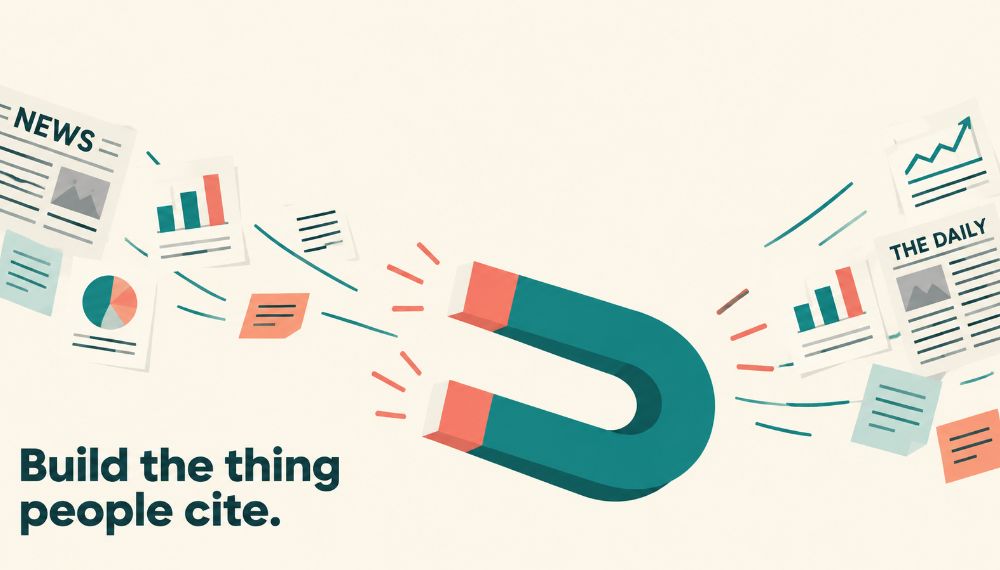
What actually counts as a linkable asset
Not every blog post is one. A “10 tips” listicle isn’t an asset, it’s filler with a number in the title. Here’s what tends to pull links.
Original research or a survey
You ask a few hundred people a question nobody’s asked them before, then you write up what they said. That’s it. Survey tools are cheap now, and a tight survey of 300 to 500 people in your niche can produce a stat no one else owns. Journalists link to the source of a number, which means they link to you.
A study built on public data
You don’t always need to run your own survey. Loads of useful data is sitting in the open, free to use. Government datasets, public records, council figures, that sort of thing. Kevin Rowe, CEO of PureLinq, built a student-debt study on free federal data that earned feature coverage, and his take on it is refreshingly un-precious: it’s “really low hanging fruit and I think almost anybody can do it,” he told a Search Engine Journal webinar. I agree. The hard part isn’t the data, it’s spotting the angle.
A tool or calculator
Mortgage calculators, pricing estimators, “how much will X cost you” widgets. If it answers a real question people type into Google, it earns links for years because it keeps being useful. These cost more to build, so I’d only do one if you’re confident the question has volume.
An industry benchmark or report
The annual “state of [your thing]” report. Once you own the benchmark everyone cites, people link to you every time they mention the topic. It compounds. The catch is you have to commit to doing it every year, or someone else becomes the benchmark.
Find an angle a journalist can’t ignore
This is where most of it lives or dies. A dataset on its own is boring. A dataset with a surprising, specific, local or timely story attached is a link.
Journalists are hungry for exactly this. In Cision’s 2026 survey of around 1,900 journalists, “data or research” was the single thing they most wanted more of from PR people, named by 47%. You’re not interrupting them. You’re handing over the thing they said they need.
A few angle tests I use before committing:
- Can I summarise the finding in one sentence that makes someone go “really?”
- Is there a local or regional cut? “UK drivers” is fine, “the worst city in Britain for potholes” gets covered by every local paper in that city.
- Does it tie to something happening now? A seasonal hook, a news event, a date on the calendar.
- Would I share it if I saw it? If not, bin it.
And a warning – Free data plus an AI writing tool makes it very easy to produce rubbish at speed. Rowe’s blunt about this: send journalists sloppy, wrong data and they stop taking your calls. The point of original research is being right about something new. Get the number wrong and you’ve torched the relationship, not built one.
“The brands that win at links in 2027 won’t be the ones sending the most emails. They’ll be the ones who made something worth pointing at. A good dataset is a tiny publishing business inside your SEO, and it keeps paying out long after the campaign’s done.” Ian Naylor, Founder of 3Way.Social
A simple way to start this month
You don’t need a budget or a research team. Here’s the version I’d hand a small business tomorrow:
- Pick one question your customers actually ask you. The thing you hear on every call.
- Find data that answers it. Survey 300 of your own email list, or dig out a public dataset.
- Write it up plainly, with a chart or two and one headline stat.
- Make a short list of 15 to 20 writers who’ve covered this topic before. Not a database of 2,000. Twenty people who’ve literally written about it.
- Email them one at a time with the stat in the subject line and a two-sentence pitch.
That’s a weekend of work and a week of outreach. If the angle’s good, a handful of those twenty bite, and each one is a link you own on merit.
“I tell clients to stop thinking about ‘content’ and start thinking about one good number. One stat nobody else has is worth more than 20 blog posts. Build the page around the number, then go and tell the people who’d want to quote it. That’s the whole job, really.” Becky Halls, Strategist at 3Way.Social
Linkable assets – FAQ
How many links should one linkable asset earn?
It varies wildly. A strong data study might pull 30 to 50 referring domains, a quiet one might get five. Don’t judge a single asset too early. The good ones keep earning links for months as people discover them.
Do I need a big budget for original research?
No. A survey of a few hundred people costs very little, and public datasets are free. The investment is in finding the angle and doing the outreach, not in the data itself.
Isn’t guest posting easier?
Easier, maybe. But a guest post earns you one link on someone else’s terms. A linkable asset can earn dozens, points them all at a page you control, and doesn’t rely on anyone accepting your pitch to publish it.
Will a core update wipe out links I’ve already earned?
Core updates reassess rankings, not your backlinks directly. Editorial links from relevant sites that you earned with a real asset are exactly the kind of signal updates tend to reward. The risk sits with thin, bought or irrelevant links, not these.
What makes journalists ignore a pitch?
Sending it to 500 people at once, no clear stat, no local or timely hook, and data they can’t verify. Make it specific, make it true, and send it to people who actually cover the topic.
Becky Halls is a Strategist at 3way.social, where she works on link-building campaigns and content strategy for clients across local and national markets.