Last Updated on September 16, 2026 by Becky Halls
When it comes to link building in SEO, you have two main paths: Black Hat and White Hat. Here’s the difference:
- Black Hat Links: These rely on manipulative tactics like link farms, spam, and hidden links to trick search engines. While they might yield quick results, they carry high risks like Google penalties, traffic loss, and even deindexing.
- White Hat Links: These focus on earning links naturally through high-quality content and genuine connections. Though they require more effort and time, they offer safer, long-term benefits like stable rankings and improved credibility.
Key Takeaway: Black Hat methods can harm your site’s reputation and rankings, while White Hat strategies build a strong, penalty-free foundation for sustainable growth.
Quick Comparison
| Factor | Black Hat Links | White Hat Links |
|---|---|---|
| Guideline Compliance | Breaks search engine rules | Follows search engine rules |
| Results | Fast but short-lived | Slower but long-lasting |
| Risk | High risk of penalties | Minimal risk |
| Link Quality | Low-quality, irrelevant | High-quality, relevant |
| Cost | Low upfront, high penalty costs | Higher upfront, stable returns |
Bottom Line: Choose White Hat methods for reliable, long-term SEO success.
White Hat, Grey Hat, and Black Hat Link Building Strategies
“Grey hat” is an informal industry label, not a category in search engine policies. If a tactic aims to manipulate rankings, it risks violating published spam and link scheme rules.
Methods often promoted as grey hat, like scaled guest posts with exact anchors, carry penalty risk. Treat them as non-compliant and judge them against official spam policies before use.
What Are Black Hat Links?
Black hat links are backlinks created using methods that go against search engine guidelines. These tactics are designed to manipulate search rankings by inflating a website’s link profile artificially, rather than earning links through genuine content or relationships.
While these methods might seem tempting for their promise of quick results, they come at a high cost. They bypass the slow and steady process of building quality links, undermining the true purpose of backlinks. Search engines treat backlinks as trust signals because credible websites naturally earn links from other reputable sources. Black hat tactics, however, exploit this system by generating links that lack genuine value or endorsement.
Common Black Hat Methods
Several black hat link-building strategies are notorious for their manipulative nature:
- Private Blog Networks (PBNs): These networks consist of multiple websites, often built on expired domains with existing authority, created solely to link back to a target site. The content on these sites is usually low-quality and serves no purpose beyond manipulating search rankings.
- Link Farms: These take PBNs to another level by creating massive networks of interconnected sites that link to each other in circular patterns. These sites typically lack any meaningful content and exist purely to game search algorithms.
- Automated Spam Links: Using software tools, spammers flood comment sections, forums, and directories with thousands of links. These links are low-quality, lack human oversight, and provide no real value to users.
- Hidden Links: These involve placing backlinks in areas where visitors can’t see them, such as using tiny fonts, matching text color to the background, or hiding links behind images. The goal is to trick search engines while keeping these manipulative links invisible to users.
- Undisclosed Paid Links: When websites sell backlinks without proper disclosure or fail to use “nofollow” attributes, they violate search engine guidelines. These links are essentially a way to buy ranking influence rather than earning genuine endorsements.
- Excessive link exchanges: Large-scale “you link to me, I link to you” arrangements, or partner pages made only to cross-link, violate link scheme policies.
- Large-scale guest posting with keyword-rich anchors: Campaigns that repeat optimized anchors across many sites are considered manipulative and unsafe.
- Widget or template links: Sitewide footer or widget links with optimized anchors, added by default, are treated as link schemes when followed.
- Hacked or injected links: Links placed without the site owner’s knowledge are spam, and they can trigger security issues and penalties.
- Press release or syndicated content links with followed optimized anchors: Distributing followed, keyword-stuffed anchors through syndication is against guidelines.
These practices not only violate search engine rules but also expose websites to hefty penalties.
Proper Use of rel Attributes
Correct link qualification helps you stay within published policies and avoid passing unwanted signals. Choose the attribute that matches the relationship and level of editorial control.
- rel=”sponsored”: Use for paid placements, affiliate links, or any link exchanged for value or compensation.
- rel=”ugc”: Use for user-generated links in comments, forums, and profiles when you do not vouch for them.
- rel=”nofollow”: Use when you prefer not to pass ranking credit. Google treats nofollow as a hint for crawling and indexing since 2020.
Google introduced rel="sponsored" and rel="ugc" in 2019, and both are recognized signals today. Apply one or more attributes when needed, keeping the tag consistent with the link’s purpose.
Risks of Black Hat Links
Search engines have become highly adept at identifying manipulative link schemes, and the repercussions can be severe. Websites engaging in black hat tactics face two main types of penalties:
- Manual Penalties: Google’s webspam team may remove your website from search results entirely.
- Algorithmic Penalties: Your rankings can plummet, drastically reducing organic traffic, sometimes to negligible levels.
Beyond penalties, black hat links can harm your website’s credibility and reputation. Spammy or low-quality links make your site look untrustworthy to visitors, which can erode customer confidence and damage business relationships.
The most severe consequence is complete de-indexing, where search engines remove your website from their databases altogether. Recovery from de-indexing is often a long and difficult process, with some websites never fully regaining their former visibility.
Detecting and Responding to Penalties
Penalty type determines your next step and how you measure recovery. Start by confirming whether a manual action exists.
- Manual actions: Check the Manual actions report in Google Search Console. If listed, follow the notice, remove or qualify unnatural links, then request review.
- Algorithmic impacts: If no notice appears, compare clicks, impressions, and average position in Search Console against link profile changes. Watch for drops aligned with spam-related updates and unnatural anchor spikes.
- Remediation: Prioritize link removals or qualification at the source, then use the disavow tool only when outreach is not possible at scale.
Quick Wins vs. Long-Term Problems
Black hat links might deliver a temporary boost in rankings and traffic, sometimes lasting a few weeks or months. This short-lived success can mislead website owners into thinking the tactics are effective.
However, search engines are constantly refining their algorithms to detect manipulative practices. What works today could result in penalties tomorrow. When the penalties hit, the fallout is often devastating.
Traffic drops are one of the most immediate consequences. A website that once enjoyed thousands of daily visitors might see its organic traffic plummet to a fraction of that number. For businesses reliant on search engines for revenue, the financial impact can be crippling.
Domain penalties can linger for years, making it incredibly difficult to recover even after removing the problematic links. In some cases, businesses find it easier to abandon their penalized domain and start over, sacrificing years of effort and brand recognition in the process.
Ultimately, the risks of black hat links far outweigh any short-term gains. As search engines continue to improve their detection methods, these tactics become an increasingly dangerous gamble.
How Google Penguin Handles Link Spam
Google’s Penguin system is part of core ranking systems and works in a near real-time manner. It tends to devalue spammy links and signals rather than boost them.
Sites usually cannot rely on manipulative links for lasting gains, even at volume. Focus efforts on earning editorial links and neutralizing unnatural signals to move forward.
What Are White Hat Links?
White hat links are all about taking the ethical route in link building. They stick to search engine guidelines and focus on earning backlinks by creating value. These links aren’t bought or manipulated – they’re earned by producing quality content and fostering genuine connections.
At its core, white hat link building is about crafting content that naturally attracts links from other websites. It’s a return to the original purpose of backlinks: acting as genuine endorsements from one site to another based on relevance and merit.
Sure, this approach takes more effort and time upfront. But the payoff is huge. It builds a strong foundation that holds up against algorithm updates and delivers long-term results. Below are some tried-and-true methods for earning ethical, high-quality backlinks.
Main White Hat Methods
- Content marketing: This involves publishing in-depth guides, original research, or valuable resources that naturally draw links. When your content solves real problems or offers unique insights, others in your industry will want to reference it as a reliable source.
- Guest posting: Writing for respected websites in your field allows you to share your expertise, provide value to their audience, and earn a backlink in return. The key is to focus on sites that align with your niche and create content that feels relevant and useful to readers.
- Digital PR campaigns: These campaigns involve creating newsworthy content and reaching out to journalists or bloggers. Whether it’s through original research, commentary on industry trends, or engaging visual content, the goal is to position yourself as a trusted source that media outlets want to feature.
- Resource page outreach: Many websites host pages listing helpful tools, guides, or resources. By offering genuinely useful content that meets their criteria, you can secure a spot on these authoritative pages.
- Broken link building: This method involves finding broken links on websites that point to content similar to yours. You then reach out to the site owner, suggesting your content as a replacement. It’s a win-win – you help them fix their broken links, and you gain a backlink.
- Unlinked mention reclamation: Find brand or product mentions that lack a link and request proper attribution when appropriate.
- Visual asset attribution: Publish original images, charts, or templates, and provide usage terms so reusers can credit your page.
Anchor Text Best Practices
Anchor patterns send strong signals about intent and relevance. Keep anchors varied and human-readable to avoid spam patterns.
- Favor variation: Use brand, URL, and natural descriptive phrases rather than repeating exact-match anchors.
- Match context: Ensure the anchor fits the sentence and the destination page topic, not just a target keyword.
- Avoid templates: Do not repeat the same optimized anchor across guest posts or syndicated placements.
Benefits of White Hat Links
White hat links come with a host of benefits that go beyond just improving your rankings:
- Longevity and stability: These links stand the test of time. Since they’re built on quality content and real relationships, they continue to provide SEO value even as search engine algorithms evolve. Unlike black hat links, which are risky and often short-lived, white hat links grow more valuable as the linking sites gain authority.
- Improved domain authority: By sticking to ethical practices, your site naturally strengthens its authority. Higher rankings lead to more visibility, which in turn creates more opportunities to earn organic backlinks.
- Reduced risk: With white hat links, you don’t have to worry about algorithm penalties or manual actions. Instead of stressing over every update, you can focus on building your business with confidence.
- Boosted brand reputation: When respected websites link to your content, it signals trustworthiness to both search engines and users. This enhanced credibility often results in more referral traffic and higher conversion rates from organic visitors.
White Hat Success Examples
The success of white hat strategies can be seen across industries, from educational institutions to small businesses, all of which have achieved lasting SEO benefits by focusing on quality and value.
- Educational institutions and research organizations: Universities often publish original research that earns thousands of backlinks from news outlets, academic journals, and industry sites. Their focus on creating valuable, citable content has made them some of the most authoritative domains online.
- Technology companies: These businesses thrive by producing detailed tutorials, documentation, and industry reports. When developers or professionals find these resources helpful, they naturally link to them from forums, blogs, and technical websites.
- Small businesses: Local companies have seen success with white hat tactics by creating location-specific content and building relationships with community organizations. Links from chambers of commerce, local news outlets, and community sites not only improve local search rankings but also drive direct traffic.
What ties all these examples together? A focus on creating real value. Whether it’s through insightful research, practical guides, or community engagement, these strategies prioritize helping others. The backlinks? They’re just a natural byproduct of doing things the right way.
Black Hat vs. White Hat: Side-by-Side Comparison
Now that we’ve explored the individual tactics of black hat and white hat approaches, let’s take a closer look at how they stack up against each other.
Choosing between these two methods boils down to a key trade-off: black hat techniques might offer quick wins, but they come with serious risks to long-term performance. On the other hand, white hat strategies focus on building a solid foundation for sustained success.
At their core, these approaches are opposites. Black hat tactics prioritize short-term results, often at the expense of trust and credibility. Meanwhile, white hat methods aim to establish lasting authority and a positive reputation. Understanding these differences is crucial when deciding which path aligns with your business goals.
Comparison Table: Black Hat vs. White Hat Links
| Factor | Black Hat Links | White Hat Links |
|---|---|---|
| Guideline Compliance | Breaks search engine rules | Adheres to search engine rules |
| Primary Methods | Link farms, paid links, automated spam, private blog networks | Content marketing, guest posts, digital PR, resource outreach |
| Results | Achieved in days | Achieved over months |
| Risk Level | High – penalties and deindexing | Low – safe from penalties |
| Cost Structure | Low upfront costs, high penalty-related costs | Higher upfront costs, predictable long-term returns |
| Link Quality | Low-quality, irrelevant links | High-quality, relevant links |
| Sustainability | Short-lived gains, frequent setbacks | Consistent growth and stability |
| Brand Impact | Harms reputation and credibility | Strengthens trust and authority |
| Traffic Quality | Poor, untargeted traffic | High-quality, relevant traffic |
| Algorithm Updates | Highly vulnerable | Resistant to updates |
| Manual Review Risk | High likelihood of penalties | Minimal risk |
| Recovery Time | Months to years (if recovery is possible) | No recovery needed |
| Scalability | Risky and limited | Easily scalable with proper resources |
This breakdown highlights the stark contrast between the two approaches and underscores the long-term value of ethical link-building.
While black hat tactics may seem appealing for their speed, they come with hidden dangers. Search engines continuously improve their ability to detect and penalize manipulative practices, meaning what works today could backfire tomorrow. The short-term benefits just aren’t worth the risk.
White hat strategies, in contrast, grow stronger over time. As the websites linking to your content gain credibility, your site’s authority also increases. This creates a snowball effect, where your initial efforts continue to deliver results long after the work is done.
Ultimately, black hat approaches often lead to costly consequences and harm your reputation, while white hat methods provide measurable, lasting returns. By focusing on ethical strategies, you position your brand as a trusted leader in your industry, paving the way for long-term success.
Choosing Safe and Ethical Link-Building Tools
The table above highlights how white hat strategies lead to lasting benefits. While understanding the theory is important, finding ethical tools to implement these strategies is the next step.
Many website owners face challenges when trying to identify legitimate link-building opportunities. It’s easy to fall for services that cut corners or lack strict standards for link exchanges. The secret lies in choosing platforms that focus on quality over quantity and follow rigorous vetting processes.
When assessing link-building tools, prioritize platforms that are transparent about their methods. Ethical services will clearly outline how they evaluate potential link partners and what criteria they use to ensure link quality. Look for tools that provide detailed reports so you can measure the value and impact of every link. One standout option in this space is 3Way.Social, a platform that aligns with white hat principles.
Measuring Link-Building Impact
Tracking outcomes helps you refine tactics and prove value. Use platform data to connect links with visibility and revenue.
- Google Search Console: Review the Links report for top linking sites and anchor text, and use Performance to track queries, impressions, and positions tied to targeted pages.
- GA4 analytics: Monitor referral traffic, engaged sessions, and assisted conversions from linking pages. Use UTM parameters for campaigns where appropriate to attribute visits.
- Quality checks: Watch link acquisition cadence, anchor diversity, and 404s on acquired links. Replace or reclaim lost links to protect gains.
3Way.Social: A White Hat Link-Building Platform
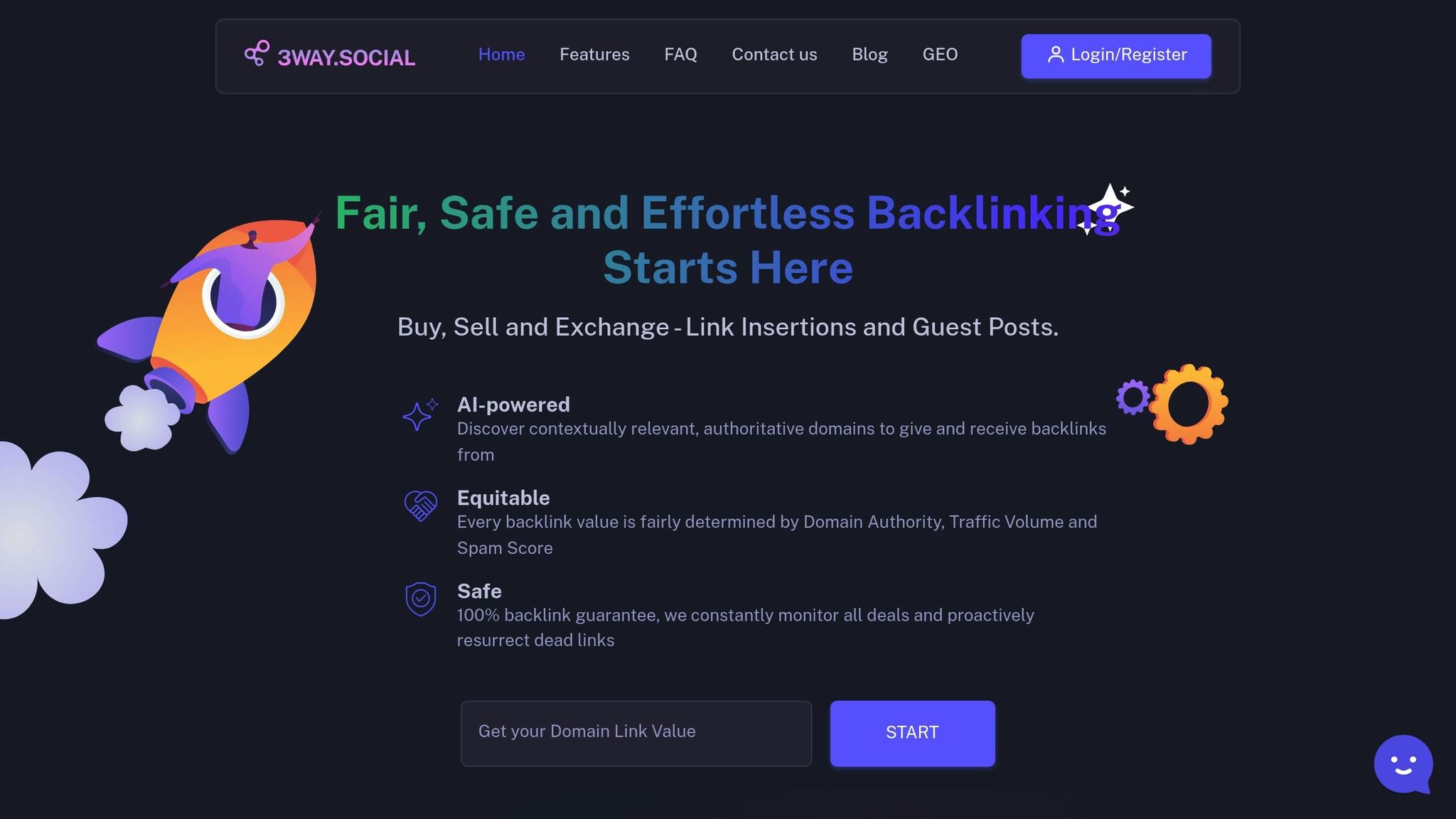
3Way.Social is an AI-powered tool designed to simplify the process of finding high-quality, legitimate link partnerships using secure ABC link exchanges.
Its AI system goes beyond basic keyword matching, analyzing factors like domain authority, content relevance, and audience overlap to create meaningful partnerships. This ensures that all parties involved benefit from the exchange.
What makes 3Way.Social unique is its focus on fair value assessment. The platform uses advanced algorithms to determine the true worth of each link exchange, ensuring balanced trades between websites of varying sizes and authority levels. This eliminates the guesswork and disputes often associated with manual link negotiations.
Key features of 3Way.Social include permanent do-follow links, a network of vetted SEO professionals, and guest posting opportunities. These allow you to create valuable content while earning backlinks from reputable businesses instead of spammy or low-quality sites.
Additionally, the platform’s link diversification tools help you maintain a natural-looking backlink profile. It evaluates your existing links and suggests new opportunities that align with your current strategy, reducing the risk of over-optimization and avoiding penalties from search engines.
3Way.Social offers flexible pricing, including a free plan with basic link exchange capabilities. Premium and enterprise plans provide advanced features like custom filters, priority support, and integrations for businesses with more complex SEO needs.
However, choosing the right platform is just one part of the equation. It’s equally important to avoid common black hat mistakes.
How to Avoid Black Hat Mistakes
Even with the best intentions, it’s easy to slip into practices that search engines consider black hat. One common misstep is focusing solely on domain authority metrics without considering content relevance or audience alignment.
Platforms like 3Way.Social help you avoid these errors with built-in quality control filters. These filters automatically screen potential partners to ensure they meet white hat standards. Unlike risky black hat networks, the platform rejects sites with thin content, suspicious link profiles, or other red flags that could harm your SEO efforts.
Another safeguard is the platform’s secure payment integration and transparent transaction process. Ethical services document all exchanges, ensuring compliance with search engine guidelines and protecting you from accusations of participating in undisclosed paid link schemes.
A user-friendly dashboard further minimizes mistakes by giving you full visibility into your link-building activities. You can easily track active links, monitor their performance, and address any issues before they escalate. This level of transparency is vital for maintaining a clean and credible link profile.
Regular audits are also essential. White hat platforms typically offer tools to review your existing backlinks and flag any that might pose risks. If problematic links are identified, you can disavow them to prevent negative impacts on your rankings.
- Qualify paid, sponsored, and affiliate links with
rel="sponsored"or nofollow to prevent passing ranking credit. - Mark user-generated links with
rel="ugc"when you have not reviewed or endorsed the content. - Avoid sitewide or template-based followed links that use keyword-rich anchors.
Ultimately, the best defense against black hat mistakes is patience and consistency. Ethical platforms like 3Way.Social emphasize gradual, sustainable growth rather than quick spikes in backlinks. This approach mirrors the natural way search engines expect websites to grow, reinforcing the strong, quality link partnerships that drive long-term success.
Disavow File: When and How to Use Safely
The disavow tool is a last resort for links you cannot remove that may harm your site. Use it when outreach is not feasible and risk is significant.
- When to use: Consider disavow for large volumes of spammy or manipulative links you cannot remove, or after a manual action for unnatural links.
- How to structure: Prefer domain-level entries for clear patterns, and keep dated notes of removal attempts in the file.
- Submission and timing: Upload through the disavow tool for your verified property, then monitor performance. Changes are not immediate and depend on recrawling.
Conclusion: The Right Way to Build Links
When it comes to link building, the approach you choose – black hat or white hat – has a lasting impact on your website’s success. Black hat tactics might promise quick wins, but they come with hefty risks like Google penalties, traffic drops, and even deindexing. These fleeting benefits often aren’t worth the long-term damage to your brand’s reputation and search rankings.
On the other hand, white hat strategies focus on building a solid foundation for sustainable growth. By earning quality backlinks from reputable and relevant sources, you not only improve search rankings but also attract targeted traffic and position your brand as a trusted authority in your field.
Link building isn’t an overnight process; it takes time and consistent effort. The key lies in creating content that naturally earns links, building genuine connections with other website owners, and engaging in guest posting or collaborative industry efforts. These methods may require more work upfront, but the payoff is lasting and reliable.
Modern tools can make ethical link building more efficient. For example, AI-powered platforms like 3Way.Social help automate the process of finding reliable partners while maintaining high-quality standards. These tools eliminate much of the guesswork, ensuring your strategies align with best practices.
As search engines refine their algorithms, they’re becoming better at recognizing and penalizing manipulative techniques. What works today might backfire tomorrow, making it even more critical to stick to ethical, white hat methods. By committing to these practices now, you safeguard your SEO efforts against future algorithm updates.
Focusing on ethical link building strengthens your domain authority, boosts organic traffic, and enhances your brand’s visibility. Prioritize quality over quantity, use the right tools, and you’ll set your website on a path of steady, sustainable growth that endures over time.
FAQs
What are the long-term risks of using black hat link-building strategies for my website?
Using black hat link-building tactics can seriously damage your website in the long run. Search engines often penalize these methods, which can result in your site being deindexed or suffering major ranking drops. This kind of fallout can drastically impact your website’s visibility, reputation, and organic traffic.
Sure, black hat strategies might deliver quick wins, but they’re a risky gamble that can undermine your long-term goals. Instead, it’s far better to stick with ethical, white hat link-building practices. These approaches not only help improve your SEO but also ensure your online presence remains strong and reliable over time.
What are the best ways to build white hat backlinks and improve my site’s SEO while staying within search engine rules?
To improve your site’s SEO within search engine rules, focus on building white hat backlinks through ethical and effective strategies. Start by creating valuable, engaging content that naturally attracts links from reputable websites. You can also explore guest blogging, team up on content collaborations, or pitch your site for inclusion in resource lists on relevant pages.
Steer clear of shortcuts like buying links or joining link schemes – these tactics can damage your site’s credibility and rankings. Instead, stick to sustainable approaches that follow search engine guidelines, paving the way for steady growth and stronger authority over time.
What should I avoid when switching from black hat to white hat link-building strategies?
When shifting to white hat link-building, steer clear of shortcuts like buying links or relying on private blog networks. These tactics might seem tempting, but they can lead to harsh penalties from search engines, putting your site’s credibility at risk.
Focus on relevance and quality when building links. Ignoring these factors can damage your reputation and undermine your efforts. Take the time to audit your backlink profile and remove any harmful or low-quality links left over from past strategies.
Instead, concentrate on ethical, sustainable approaches. Create content that provides real value and work on building authentic relationships with reputable websites. These methods may take longer, but they lay the groundwork for long-term success.