Search intent: why matching the page to the query wins
Last Updated on November 2, 2026 by Becky Halls
A page I wrote two years ago used to sit at position 3 for a decent commercial term. Then it slid to page two and stayed there. The content was fine. The links were fine. The whole SERP had changed under it. Google had decided people typing that query wanted a comparison table, and I’d handed them a 2,000-word explainer. Intent moved but my page didn’t.
That’s the thing about search intent. It quietly decides whether all your other effort counts.
What search intent really means
Search intent is the reason behind the query. Not the words, the reason. Someone typing “best running shoes” wants to weigh up options. Someone typing “buy Nike Pegasus 41” wants a product page and a checkout button. Same topic, completely different job.
Get the job wrong and it almost doesn’t matter how good your page is. You can write the best explainer on the internet, and if the query wants a product page, you’re in the wrong room.
Read the SERP, not the keyword
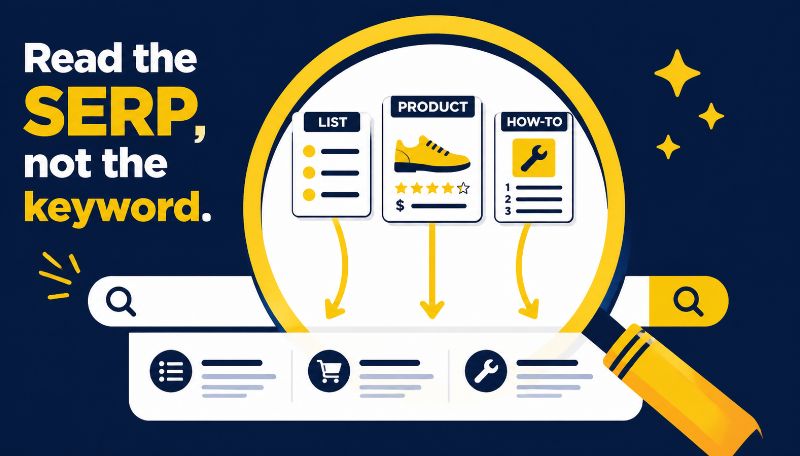
The mistake I see most often is people guessing intent from the keyword and then writing. Don’t guess. Open the top 10 and look.
If page one is all listicles and comparison posts, Google’s told you what it wants. If it’s product pages, a blog post won’t crack it no matter how many links you aim at it. The live SERP is Google showing its working. Read it.
"I stopped guessing intent from the keyword years ago. I open the top 10 and look at what Google's actually rewarding. If it's all comparison posts and I've written a product page, I've already lost. The SERP tells you what the page needs to be, so let it." Becky Halls, Strategist at 3way.Social
Match the page type to the intent
Four broad intents, four kinds of page.
Informational means guides, how-tos and explainers. People want to understand something. Commercial investigation means comparisons, “best of” posts and reviews, because people are deciding. Transactional means a clean, fast product, category or pricing page, because people are buying. Navigational means they want a specific brand or page, so don’t try to outrank a brand for its own name.
Aleyda Solís made a point I keep coming back to. Good content, she says, is content that “connects with their intent, and meets their needs.” That held true long before AI search and it holds now. The format shifts around. The fundamentals sit still.
The long tail is where intent actually lives
Everyone fights over the fat head terms. But the median keyword in Backlinko’s study of 306 million US keywords gets just 10 searches a month. Half of all search is quieter and more specific than the terms sitting in your tracker.
And Google itself says 15 percent of the searches it sees every day are brand new, never typed before. You can’t keyword-research those. All you can do is understand the intent behind the questions in your space, then cover them properly.
"Chasing big-volume keywords is how most sites waste a year. The money's in the hundreds of specific questions people actually type. Answer those properly and the rankings mostly sort themselves out." Ian Naylor, Founder of 3Way.Social
Intent drifts, so re-check it
Intent isn’t fixed. “iPhone 15” was commercial at launch and drifts informational as the model ages. A seasonal term can flip across the year. So when a page that used to rank starts sliding, re-pull the SERP before you touch a word of the content. Nine times out of ten the SERP changed and your page didn’t follow.
Why the next core update makes this urgent
Late September and October has been rough on the trackers. Weeks of volatility, big swings around the 20th and 24th, and no confirmed broad core update since spring, with plenty of people braced for one.
Core updates reward pages that match what searchers actually want, and demote the ones that miss. Intent mismatch is one of the first things to wobble when an update lands. If you’ve got pages pointed at the wrong job, that’s when you’ll feel it. Far better to sort them before an update than to explain the drop after.
A quick intent audit
Pick your 10 most important pages. For each one, Google the main keyword and look at the top results. Ask a single question: does my page type match what’s ranking? If yes, leave it alone. If no, you’ve found your problem. Fix the mismatch before you spend another hour on links or word count.
It takes about 20 minutes and it’s the highest-value 20 minutes in on-page SEO.
FAQ
How do I find the search intent for a keyword?
Open the top 10 results. The format that dominates (guides, comparisons, product pages) is the intent. Trust the SERP over your gut.
Can one page target two intents?
Rarely well. A page trying to both explain and sell usually does neither. If a keyword splits across intents, split it into two pages.
Does search intent matter for AI answers too?
Yes. Answering the actual question cleanly is what gets you pulled into AI answers. But start with classic search intent, because it’s the same skill underneath.
How often should I re-check intent?
Any time a page slips in the rankings, and for your key pages, a couple of times a year regardless. Intent drifts.
What are the four intent types again?
Informational, commercial investigation, transactional and navigational. Most keywords land cleanly in one.
Becky Halls is a strategist at 3way.social, where she spends a worrying amount of time reading SERPs so her clients don’t have to.